
Bigfoot RV Leveling System Troubleshooting: Easy Fixes
Introduction
If your Bigfoot RV leveling system will not extend, retract, level the coach, or power on, start with the basics: park on firm ground, confirm battery power, inspect the control panel, and check the hydraulic fluid. Most faults come from low voltage, a poor ground, a blown fuse, a stuck switch, low fluid, or a hydraulic leak.
Bigfoot systems are hydraulic leveling systems made for motorhomes and other recreational vehicles in the United States. Exact parts and procedures vary by model, so use the manual for your coach and leveling system before replacing parts or changing fluid.
This guide covers common Bigfoot leveling system problems, safe tests, likely causes, and the point at which you should stop and call an RV technician.
How a Bigfoot RV leveling system works
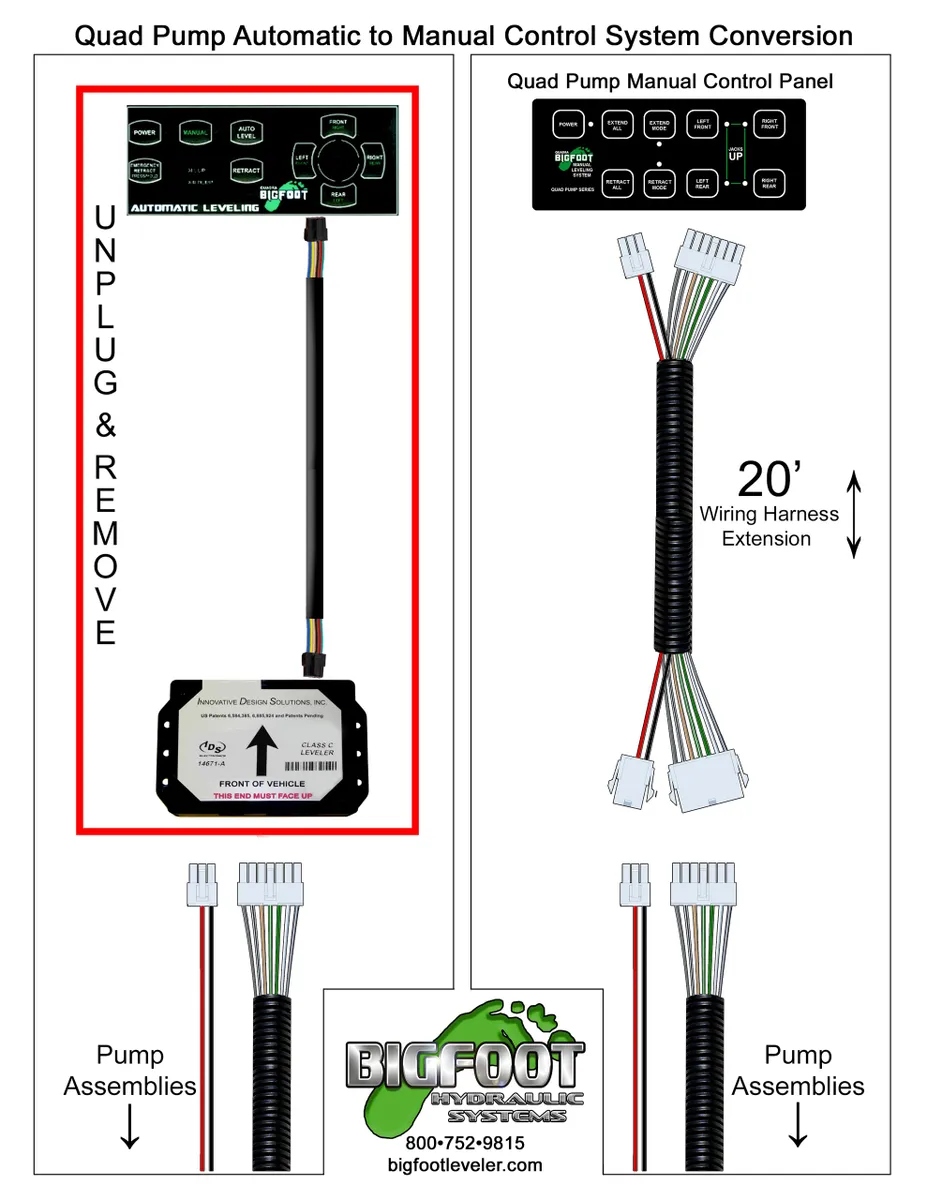
A Bigfoot system uses a 12-volt electrical circuit to run a hydraulic pump. The pump sends fluid through valves and hoses to the leveling jacks. A control panel or automatic controller tells the pump and valves what to do.
The main parts are:
- 12-volt battery and charging system: Supplies power to the pump, control board, and valves.
- Main fuse or circuit breaker: Protects the high-current pump circuit.
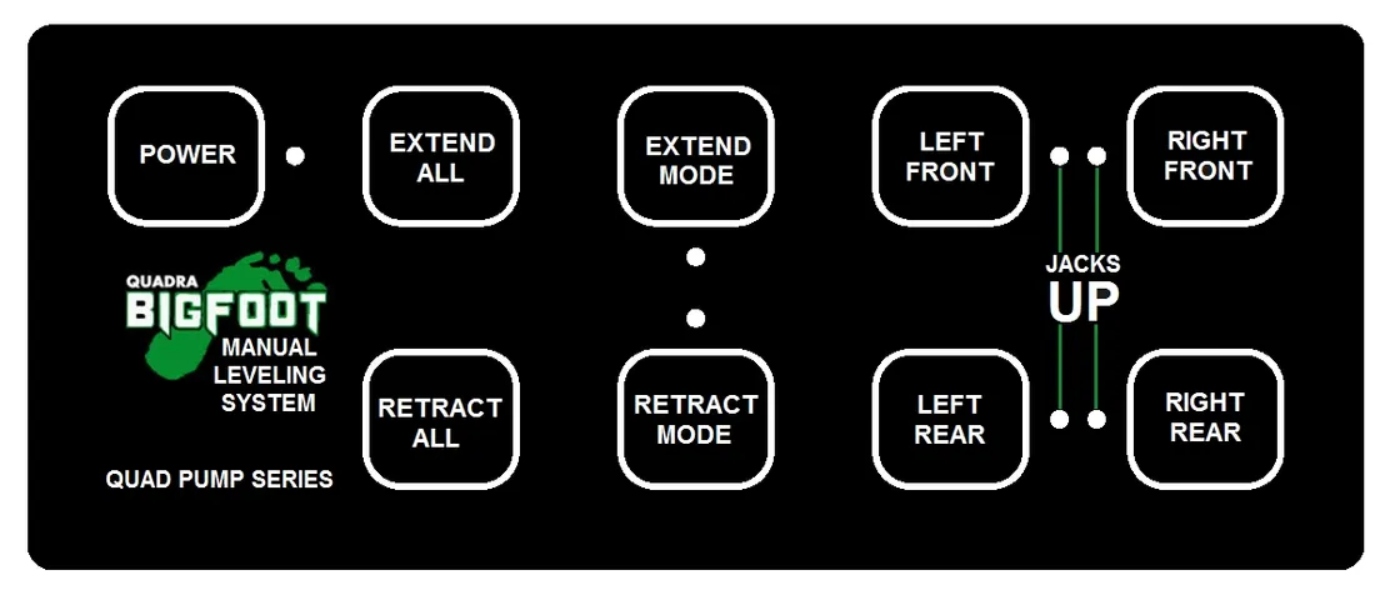
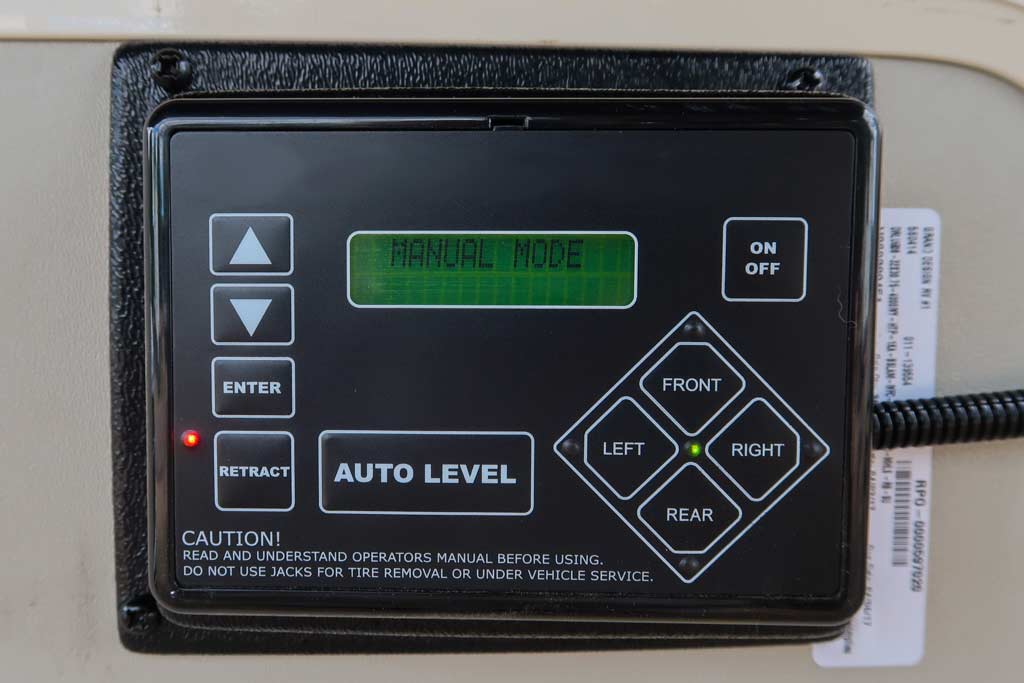
- Control panel: Sends commands and displays system status.
- Pump and hydraulic reservoir: Builds pressure and stores fluid.
- Solenoid valves: Direct fluid to individual jacks.
- Hydraulic cylinders: Extend and retract the leveling jacks.
- Ground wires and power cables: Complete the electrical circuit.
- Position sensors or control logic: Used on some automatic systems to detect level or jack position.
The system may have manual controls, automatic leveling, or both. A problem with one jack does not always mean the jack itself has failed. The cause may be the valve, wiring, ground, control board, or low hydraulic pressure.
Before you troubleshoot
Gather these items:
- The Bigfoot system manual for your exact model
- A digital multimeter
- A flashlight
- Safety glasses and work gloves
- A clean rag
- Basic hand tools
- A compatible hydraulic fluid, only if the manual identifies it
- Wheel chocks
- A battery charger or shore-power connection, if needed
Do not rely on the leveling jacks to support the RV while you work underneath it. Use approved jack stands and follow the chassis manufacturer’s lifting instructions.
Safety rules before working on the leveling system
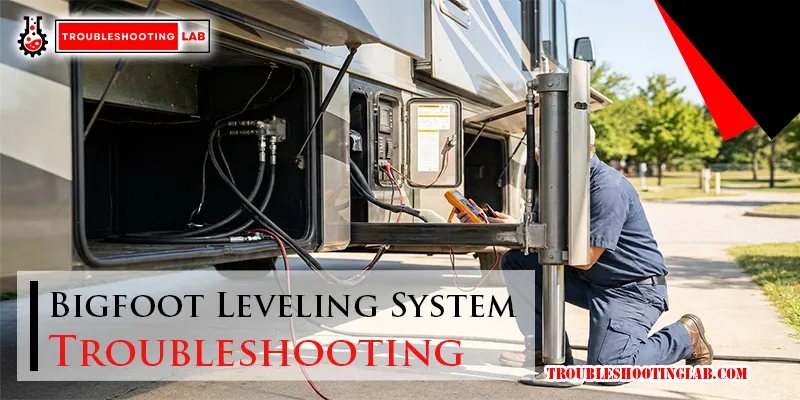
Safety comes before diagnosis. A large motorhome can move or drop if a hydraulic line fails, a jack retracts, or the coach shifts on soft ground.
Follow these rules:
- Park on solid, level ground when possible.
- Set the parking brake.
- Place the transmission in Park, or follow the chassis maker’s parking procedure.
- Chock the wheels.
- Keep people away from the space beneath the coach.
- Never place any part of your body under an unsupported RV.
- Do not loosen a hydraulic fitting while the system may be pressurized.
- Keep hands away from moving jack feet and pinch points.
- Do not use leveling jacks to raise wheels off the ground unless the RV and system manuals specifically allow that procedure.
- Stop if a hose is split, a fitting is damaged, or hydraulic fluid is spraying.
Hydraulic fluid can enter skin under high pressure. A small leak may look harmless but can cause a serious injury. Seek urgent medical care for a suspected injection injury.

The correct Bigfoot RV leveling system troubleshooting order
Troubleshoot in this order:
- Check the operating conditions.
- Check battery voltage and grounds.
- Check the fuse or circuit breaker.
- Inspect the control panel and wiring.
- Check hydraulic fluid level and leaks.
- Test the pump and valves.
- Test the individual jack.
- Reset or recalibrate the system if the manual allows it.
- Replace parts only after testing confirms the fault.
This order prevents a common mistake: replacing a pump when the real problem is a weak battery or damaged ground cable.
1. Check the operating conditions
Some Bigfoot systems will not operate unless the ignition is off, the parking brake is set, or a required interlock is active. Other installations may use different safety signals.
Check:
- Is the engine off if the system requires it?
- Is the parking brake set?
- Is the RV connected to shore power?
- Is the battery disconnect switch on?
- Is the coach battery connected?
- Is the control panel showing power?
- Are any warning lights or error messages present?
If the system worked earlier and suddenly stopped after service, check whether a battery disconnect, chassis switch, or ignition-related wire was left off.
2. Test battery voltage
A 12-volt battery can show normal voltage with no load and still fail when the pump starts. Measure voltage at the battery and, if possible, at the pump while the pump is running.
As a general guide:
| Battery reading at rest | What it may suggest |
|---|---|
| About 12.6 volts | Fully charged lead-acid battery |
| About 12.2 volts | Partly discharged battery |
| Below about 12.0 volts | Low charge or battery problem |
| Large voltage drop when pump runs | Weak battery, poor cable, or bad ground |
These values are general battery checks, not a replacement for the Bigfoot manual. Battery type, temperature, charging state, and meter accuracy affect the reading.
Clean and tighten:
- Battery terminals
- Pump power cable
- Chassis ground
- Ground connection near the pump
- Control-panel ground
- Any inline fuse holder
A ground may look tight but still fail because of rust, paint, loose hardware, or corrosion between cable lugs.
3. Check the main fuse and circuit breaker
A failed fuse often points to another fault. Do not install a larger fuse to keep the system working.
Inspect the fuse or breaker for:
- A blown fuse
- Heat damage
- Melted plastic
- Loose terminals
- Corrosion
- A breaker that repeatedly trips
If the fuse blows again as soon as you activate the system, stop testing. A shorted wire, failed solenoid, seized pump, or damaged control component may be drawing too much current.
4. Inspect the control panel
A dead control panel usually indicates a power, ground, fuse, switch, or wiring problem. It does not usually prove that the hydraulic pump has failed.
Look for:
- No display or indicator lights
- Flickering lights
- Buttons that work only when pressed hard
- Water intrusion
- Loose connectors
- Damaged harnesses
- Rodent damage
- Corroded terminals
Do not probe small control-board terminals with a large test probe. A short across the wrong pins can damage the board.
5. Check hydraulic fluid and leaks
With the jacks in the position specified by the manual, inspect the reservoir. Some systems require the jacks to be fully retracted before checking the level. The correct position matters because the fluid level changes as the cylinders extend.
Check for wet areas around:
- The pump reservoir
- Hydraulic hoses
- Hose fittings
- Valve blocks
- Jack cylinders
- The underside of the jack body
- The pump motor
Use only the fluid listed for your exact Bigfoot system. Do not assume that power-steering fluid, generic hydraulic oil, or automatic transmission fluid is interchangeable. Mixing fluids can damage seals or create poor system performance.
A fluid level that drops again after filling indicates a leak. Adding fluid may restore operation briefly, but it does not repair the fault.
6. Test the pump
When you command a jack to move, listen to the pump.
- No sound: Look for a control, fuse, relay, power, ground, or pump-motor issue.
- A click but no motor: Check the pump relay, high-current cable, battery voltage, and motor.
- Motor runs but jacks do not move: Check fluid level, air, a valve problem, a blocked line, or a mechanical jack issue.
- Motor sounds strained: Check low voltage, low fluid, a seized jack, a blocked line, or excessive load.
- Motor runs continuously: Stop the system. Possible causes include a control fault, stuck switch, valve problem, or pressure issue.
Do not bypass the controller or apply power directly to unknown terminals unless the exact service manual gives a safe test procedure. Direct testing can damage valves and control electronics.
Bigfoot leveling system symptoms and likely causes
Use the symptom that best matches your problem. Several causes can create the same symptom, so confirm the fault with testing.
| Symptom | Likely causes | First checks |
|---|---|---|
| Control panel is completely dead | Low battery, disconnect switch off, blown fuse, bad ground, failed panel | Battery voltage, fuse, ground, panel connector |
| Panel works but pump is silent | Interlock not met, relay fault, wiring fault, failed motor | Parking brake, ignition state, voltage at pump |
| Pump runs but no jack moves | Low fluid, air, valve fault, blocked line, failed pump | Fluid level, leaks, valve operation |
| One jack will not extend | Bad solenoid, wire fault, stuck valve, damaged jack | Compare that jack’s valve and wiring with a working side |
| One jack will not retract | Mechanical binding, damaged cylinder, blocked return path, valve issue | Inspect jack, dirt, bent parts, return operation |
| Jacks retract slowly | Weak battery, low fluid, cold fluid, air, dirty or damaged parts | Battery under load, reservoir, leaks |
| Pump runs after the button is released | Stuck control, relay, solenoid, or controller fault | Release all controls and disconnect power if safe |
| System levels unevenly | Sensor issue, incorrect setup, soft ground, jack travel problem | Ground condition, manual procedure, sensors |
| System loses level overnight | Internal leak, external leak, valve leak, cylinder bypass | Mark jack positions and inspect for fluid loss |
| Fuse keeps blowing | Short, seized pump, bad solenoid, damaged harness | Stop replacing fuses; inspect current path |
| Error or warning message appears | Low voltage, sensor fault, setup error, controller fault | Record the code and use the exact manual |
When only one jack fails
A single-jack problem is useful because it gives you a comparison. If three jacks work and one does not, compare the failed jack’s:
- Valve connector
- Wiring
- Ground path
- Hydraulic hose
- Cylinder body
- Mechanical movement
A valve may click but still fail to pass fluid. Likewise, a jack may move when unloaded but fail under the coach’s weight. Do not assume that sound alone proves the valve works.
When all jacks fail
If every jack stops working at the same time, look for a shared cause:
- Main battery power
- Main ground
- Main fuse
- Pump relay
- Control-panel power
- Safety interlock
- Low fluid
- Controller failure
All-jack failure is less likely to be caused by four separate bad cylinders at the same moment.

How to troubleshoot a Bigfoot jack that will not retract
A jack that stays extended needs prompt attention because it can limit travel. First, make sure the RV is safely supported and that no one is under the coach.
Try the normal retract command once. If the pump runs but the jack does not move, inspect the jack for:
- Mud, stones, or road debris
- A bent foot or cylinder
- Damage from a curb or obstacle
- A kinked hydraulic hose
- Fluid leakage
- Rust or mechanical binding
Do not force the jack upward with a vehicle jack unless the Bigfoot manual provides that method. Do not open hydraulic fittings as a first step. Releasing a pressurized line can cause injury and may introduce air or dirt into the system.
If the system has a manual release procedure, follow the model-specific instructions. Some systems use valve controls or a manual pump-release method, but the correct procedure differs by installation.
If the jack retracts only after repeated attempts, the fault may involve a weak return path, trapped air, a sticking valve, damaged seals, or a mechanical problem. Have the system inspected before travel.

How to troubleshoot a Bigfoot jack that will not extend
If the pump runs but a jack does not extend, check the fluid level and look for leaks first. A low reservoir can prevent the pump from building enough pressure.
Next, compare the failed jack with a working jack:
- Confirm that the control command is correct.
- Listen for the valve response.
- Inspect the valve connector.
- Check for broken or pinched wires.
- Look for a kinked hose.
- Inspect the jack for physical damage.
- Check whether the system is on soft or shifting ground.
Do not place the full coach load on one partially extended jack. If the RV is unstable, stop and call a mobile RV technician or recovery service.
A jack that extends with no load but fails when leveling may indicate low pump pressure, a weak motor, internal cylinder leakage, a restricted hose, or an overloaded setup. Pressure testing requires the correct gauge, fittings, and service procedure.

Bigfoot automatic leveling problems
Automatic leveling may fail even when the hydraulic hardware works. The controller needs correct power, sensor information, and a valid starting position.
Common causes include:
- The RV was not parked within the system’s operating limits.
- The coach moved during the leveling cycle.
- A sensor or sensor wire is damaged.
- The system lost its calibration.
- Battery voltage dropped during operation.
- A jack is not fully retracted at startup.
- The ground is too soft, sloped, or uneven.
- The controller received an incomplete cycle.
Start by retracting all jacks fully, if the system allows it. Then park as required by the manual, set the parking brake, and run the automatic cycle again.
Do not assume that an automatic system can correct every parking position. Leveling jacks have limited travel. If the site is sharply sloped, use a better site or approved leveling blocks where the RV and system manuals permit them.
Recalibration and reset
A reset may clear a temporary control fault, but it will not repair a leak, bad sensor, low battery, or damaged valve.
Use only the reset or calibration procedure for your exact controller. Record any error code before resetting. If the fault returns, the code and the conditions that caused it can help a technician diagnose the system.
Avoid disconnecting the battery as a routine reset unless the manual says to do so. Battery removal can erase settings on some controllers and may not clear the actual fault.

Electrical tests that can save time
A multimeter can help separate a power problem from a hydraulic problem.
Voltage test
Measure:
- Battery voltage with the system off.
- Voltage at the control panel.
- Voltage at the pump power terminal.
- Voltage while the pump is commanded to run.
A large difference between the battery and pump readings suggests a cable, fuse, relay, connector, or ground problem. A sharp voltage drop only when the pump runs suggests a weak battery, poor connection, or excessive motor load.
Continuity test
Turn power off before checking continuity. Use continuity tests for:
- Broken wires
- Open grounds
- Damaged switch circuits
- Disconnected connectors
Do not use a continuity test on a powered circuit. Do not assume a wire is good because it shows continuity with no load. A corroded wire can pass a small meter signal but fail under pump current.
Solenoid and relay checks
The correct resistance depends on the component and system design. Use the Bigfoot service information for the expected value. An open circuit, short circuit, or result far outside the specified range may indicate a failed coil.
A normal resistance reading does not prove that a solenoid moves or passes hydraulic fluid. Electrical and hydraulic tests must agree.

Common mistakes to avoid
Several troubleshooting habits can make the problem worse:
- Replacing the pump first: Low voltage and bad grounds are more common starting points.
- Adding the wrong fluid: Fluid type depends on the exact system.
- Using a larger fuse: This can damage wiring or start a fire.
- Working under a coach held only by jacks: Hydraulic pressure can be lost without warning.
- Opening a hydraulic line to release pressure: This creates a leak and a safety hazard.
- Ignoring a slow leak: A small leak can become a failed jack or empty reservoir.
- Repeatedly cycling a stalled pump: This can overheat the motor and drain the battery.
- Resetting without recording the error: Valuable diagnostic information may be lost.
- Assuming a clicking valve is good: A click does not prove hydraulic flow.
- Leveling on unstable ground: Soft soil can let the jacks sink or shift.

When to call an RV technician
Call a qualified RV technician or hydraulic service professional when:
- The RV is unstable.
- A jack will not retract for travel.
- Hydraulic fluid is spraying or leaking heavily.
- The pump runs continuously.
- A fuse blows repeatedly.
- The pump motor becomes hot or smells burned.
- A hose, valve block, or cylinder is damaged.
- The system needs pressure testing.
- The controller shows a recurring fault.
- Electrical testing points to a control-board failure.
- You cannot safely access the component.
Give the technician useful information:
- Bigfoot system model
- RV make, model, and year
- Exact symptom
- Whether one or all jacks are affected
- Battery voltage readings
- Any error code
- Recent repairs or battery replacement
- Photos of leaks, wiring, and damaged parts
The Bigfoot leveling system manufacturer, Quadra Manufacturing, provides model-specific product information and support. Use the manual supplied with the RV or system because installations and controller versions can differ.

A practical Bigfoot troubleshooting decision table
The table below helps choose the next safe action.
| What you observe | Best next action |
|---|---|
| No panel lights | Check battery disconnect, battery, fuse, ground, and panel power |
| Panel lights but no pump | Check interlocks, relay, pump power, and pump ground |
| Pump runs with no movement | Check fluid, leaks, valves, air, and pump pressure |
| One jack fails | Compare its valve, wire, hose, and cylinder with a working jack |
| Jack extends but will not retract | Inspect for binding and follow the manual’s release procedure |
| Jack retracts but will not extend | Check fluid, valve operation, hose condition, and pump pressure |
| Fuse blows again | Stop; find the short, seized motor, or failed component |
| Automatic mode fails but manual works | Check sensors, calibration, setup, and controller inputs |
| System works after charging battery | Test battery health and charging voltage before trusting it |
| System loses level after parking | Inspect for leaks and internal valve or cylinder bypass |
The key decision is whether the fault is electrical, hydraulic, mechanical, or related to setup. Testing one category at a time is faster than changing several parts at once.

Bigfoot RV leveling system maintenance
Routine checks can prevent many leveling failures:
- Inspect hydraulic hoses during regular RV service.
- Look for wet fittings or fluid on jack cylinders.
- Keep jack shafts clean according to the system instructions.
- Protect electrical connectors from water and corrosion.
- Check battery condition before a long trip.
- Exercise the system periodically if the RV is stored for long periods.
- Keep the reservoir at the specified level.
- Inspect jacks after driving on rough roads or over obstacles.
- Do not paint, grease, or modify parts unless the manual permits it.
- Record repairs and fluid additions.
Use the manufacturer’s maintenance schedule when it differs from general advice. Storage conditions, road salt, dust, and climate can change how often inspection is needed.

Frequently asked questions
Why does my Bigfoot leveling system beep but not move?
A beep may indicate an operating condition, low voltage, an incomplete retract cycle, or a controller warning. Check the display or indicator pattern, battery voltage, parking brake, ignition state, and jack position. The beep pattern is model-specific, so use the exact manual rather than guessing from sound alone.
Can I use any hydraulic fluid in a Bigfoot system?
No. Use only the fluid specified for your model and installation. The wrong fluid can affect seals, valves, pump operation, and cold-weather performance. If the reservoir contains an unknown or mixed fluid, ask a qualified technician before flushing or refilling it.
Why does my Bigfoot pump run slowly?
Low battery voltage is a common cause. Other possibilities include poor cable connections, a weak ground, a worn motor, low fluid, a restricted line, or a jack under excessive load. Measure voltage at the pump while it runs instead of judging the sound alone.
Why does one Bigfoot jack keep sinking?
A jack that slowly retracts or loses position may have an external leak, a leaking valve, worn cylinder seals, or a control problem. Mark the jack position, inspect for fluid, and avoid relying on the system to hold the RV level until the fault is repaired.
Can I drive with a Bigfoot jack partly extended?
No. A partly extended jack can strike the road, damage the jack, or affect vehicle control. Retract every jack fully and confirm the system’s travel-safe indication before driving. If one jack will not retract, arrange professional help rather than forcing the mechanism.
Conclusion
Most Bigfoot RV leveling system faults can be narrowed down by checking the system in a safe order: operating conditions, battery voltage, grounds, fuse, control panel, fluid, leaks, valves, and individual jacks.
Start with low-risk checks before replacing parts. Do not work under an unsupported RV, use the wrong hydraulic fluid, bypass safety circuits, or keep cycling a pump that is stalled or overheating. If the problem involves a pressure fault, damaged hose, unstable coach, recurring fuse failure, or jack that will not retract, use a qualified RV technician.
The best next step is to identify whether one jack or the whole system has failed, record any error code, and test battery voltage at the pump during operation.