Lippert Ground Control 3.0: RV Leveling Guide
The Lippert Ground Control 3.0 electric 5th wheel RV leveling system is an automatic jack system made for many fifth-wheel trailers in the United States. It uses powered front landing gear and rear leveling jacks to help level and stabilize the RV at a campsite.
The system can save time, but it still needs a solid site, a charged 12-volt battery, correct setup, and safe jack use. The exact number of jacks, control panel, app features, and replacement parts can vary by RV model and installation date. Always match the system to the RV’s serial number and the current Lippert manual before buying parts or changing wiring.
Introduction
Setting up a fifth wheel by hand can mean repeated trips between the hitch, bubble level, and landing gear switches. Ground Control 3.0 reduces much of that work through an electronic control panel and automatic leveling routines.
It does not replace safe RV setup. The trailer must be connected to the tow vehicle during the first part of the unhitching process. The ground must be firm. The landing gear and rear jacks must have room to extend. A weak battery or poor ground can also cause strange system behavior.
This guide explains what the system does, how to use it, how to calibrate it, and how to find common faults without guessing.
What Is the Lippert Ground Control 3.0 System?
The Lippert Ground Control 3.0 is an electric automatic leveling system for fifth-wheel RVs. It normally includes these main parts:
- Front electric landing gear
- Rear electric leveling or stabilizer jacks
- A control module
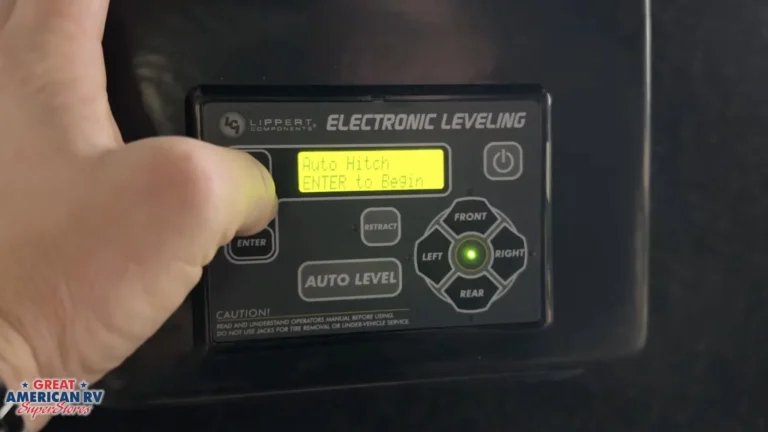
- A wired touchpad
- Electric motors and gear assemblies
- Wiring harnesses and ground connections
- Optional connection to compatible Lippert OneControl equipment
Some fifth wheels use a four-point layout. Other models may use a six-point layout or a related Lippert system. The jack layout matters because the control board, wiring, motor location, and calibration process may differ.
The system’s job has two parts:
- Leveling: Adjusting the trailer from side to side and front to back.
- Stabilizing: Reducing movement after the trailer is parked and leveled.
The jacks do not make an unsafe campsite safe. They also do not replace wheel chocks, proper hitch support, or a solid foundation.
Ground Control 3.0 versus manual leveling
A manual fifth-wheel setup may require separate switches for the landing gear and rear jacks. Ground Control 3.0 combines those functions in one control system.
The main benefit is convenience. The main trade-off is added electrical and electronic complexity. A manual system may still work when a battery is weak or a controller fails. An automatic system needs good power, sound wiring, and working sensors.
What You Need Before Using It
Before leveling, inspect the site and prepare the RV. This prevents many errors that appear to be control-board problems.
Site and trailer checklist
Confirm that:
- The site is firm and free of soft mud.
- The trailer has enough room for the jacks to extend.
- No sewer hose, water hose, cable, or storage door is under a jack.
- The tires are on stable ground.
- Wheel chocks are in place before disconnecting.
- The 12-volt battery is connected and charged.
- The tow vehicle is still connected before the landing gear takes the pin weight.
- The trailer is not resting on a damaged jack foot or bent mounting bracket.
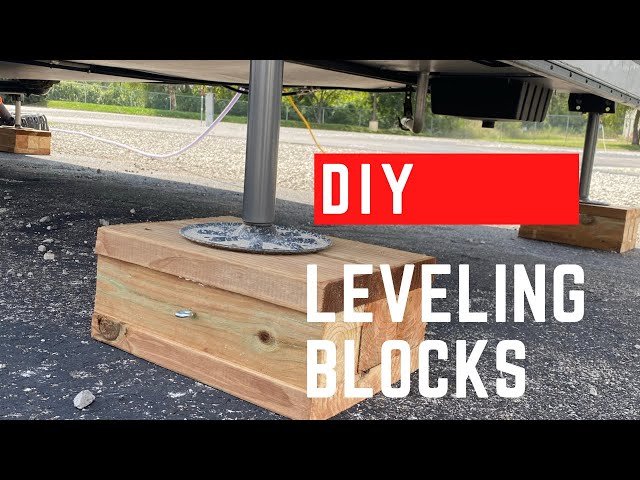
Use wood blocks or approved jack pads when the ground is soft. Blocks can reduce jack extension and help spread the load. They must sit flat and must not slide.
Why battery power matters
The motors draw high current when they move a heavy fifth wheel. A battery may show normal voltage with no load but drop sharply when a motor starts.
Check:
- Battery terminals
- Main battery disconnect switch
- Negative cable connection
- Inline fuses or circuit breakers
- Frame ground points
- Corrosion near the controller and motor plugs
Do not replace a fuse with a larger fuse. The fuse protects the wiring and control system.
How to Level a Fifth Wheel With Ground Control 3.0
The control labels can vary. The procedure below follows the normal setup logic, but the owner’s manual for your exact RV takes priority.
1. Choose the site and chock the wheels
Park the fifth wheel on the best surface available. If the site slopes sharply, reposition the trailer when possible instead of asking the jacks to correct a large slope.
Place wheel chocks on both sides of the trailer wheels. Chocks should be installed before you disconnect the trailer from the tow vehicle.
2. Connect power and inspect the jacks
Turn on the RV’s 12-volt system. Look at each jack before pressing the auto-level button.
Check for:
- Bent legs
- Missing foot pads
- Loose bolts
- Damaged wires
- Dirt packed around moving parts
- A jack that sits at a different angle from the others
Do not operate a jack that is visibly bent or pulling away from its mount.
3. Keep the tow vehicle connected
Use the landing gear to support the front of the fifth wheel while the kingpin remains connected. Extend the landing gear only far enough to take pressure off the hitch.
The tow vehicle should remain connected until the trailer is supported by the landing gear and the wheels are securely chocked.
4. Disconnect the fifth wheel
Follow the normal hitch release process:
- Lower the landing gear until it supports the trailer.
- Set the tow vehicle brake.
- Release the fifth-wheel locking mechanism.
- Slowly pull the tow vehicle forward.
- Stop and inspect the gap between the kingpin and the hitch.
Never stand between the tow vehicle and trailer during this step.
5. Run the automatic leveling cycle
Use the wired touchpad or compatible control method. Select the automatic leveling command shown on the panel.
The system may:
- Extend the front landing gear
- Measure the trailer position
- Adjust the front-to-back angle
- Extend the rear jacks
- Make smaller corrections until the programmed level position is reached
Keep people, pets, and loose items away from the jacks. Watch the system during the full cycle. Stop it if a jack twists, slips, or contacts an object.
6. Check the result
Place a small bubble level inside the RV or use a known level reference. Check both directions.
A level reading can differ from the floor if the floor or counter is not installed level. For a better reference, mark a level position during a successful setup and use the same location each time.
If the system stops but the RV is not level, do not keep pressing buttons at random. The system may need zero-point recalibration, a sensor check, or a site change.
7. Lower the rear jacks for support
When the automatic cycle is complete, confirm that the rear jacks are firmly planted. They should support and steady the trailer without excessive extension.
Do not use the rear jacks to lift the wheels clear of the ground. If a wheel leaves the ground, stop and correct the setup. A wheel that is off the ground can reduce stability and change the load on the chassis and jacks.
How to Calibrate the Zero Point
The zero point is the position the control system treats as level. If the RV is consistently high on one side or tilted front to back after an automatic cycle, the zero point may be wrong.
The exact button sequence can differ by controller version. Many Ground Control 3.0 procedures use the front and rear arrows together or another touchpad combination to enter zero-point calibration. Do not rely on a generic sequence if the buttons on your panel differ.
Safe calibration method
- Park on a surface that is as level as possible.
- Use a reliable level inside the RV.
- Chock the wheels.
- Place the trailer in the correct supported position.
- Adjust the landing gear and rear jacks until the trailer is level.
- Enter the zero-point calibration mode shown in the manual.
- Save the level position.
- Run automatic leveling once to confirm the result.
Calibration does not fix a bent jack, bad motor, low battery, broken sensor, or unstable site. It only tells the controller which position should count as level.
Signs that calibration may be needed
- The system repeats the same wrong tilt every time.
- The trailer is level by a bubble level but the controller reports an error.
- The control board was replaced.
- A jack or sensor was replaced.
- The battery was disconnected during a service event and the system lost its stored setting.
Troubleshooting Common Ground Control 3.0 Problems
Troubleshoot in a safe order. Start with power and physical inspection before replacing expensive parts.
The control panel is blank
Possible causes include:
- The battery disconnect is off.
- The battery is discharged.
- A fuse or circuit breaker is open.
- The touchpad plug is loose.
- The main ground is corroded.
- The controller is not receiving 12-volt power.
First, turn on the battery disconnect and check battery voltage. Inspect the main fuse or breaker. Then inspect the touchpad cable and controller connections.
If the battery voltage falls sharply when a jack motor starts, charge or test the battery before diagnosing the controller.
One jack does not move
Possible causes include:
- A loose motor plug
- A damaged wire
- A failed motor
- A seized or damaged gear assembly
- A control-board output fault
- Excessive load on that jack
Turn the system off before checking plugs. Look for pin damage, water entry, and rubbed wires.
Do not swap motor plugs as a casual test unless the service procedure specifically permits it. Incorrect testing can create a new wiring fault or move a jack unexpectedly.
If the motor runs but the leg does not extend, the gearbox, pin, or mechanical drive may be damaged. Stop using that jack until it is inspected.
A jack runs in the wrong direction
A reversed motor connection, incorrect motor assignment, damaged wiring, or controller issue can cause this symptom. Stop operation at once.
Do not continue the cycle to see what happens. A reversed jack can overload the frame or make the trailer unstable. Check the wiring against the RV-specific diagram and seek qualified RV service if the connections are unclear.
The system says “error” or will not auto-level
Common causes include:
- Low battery voltage
- A jack that is fully retracted or fully extended
- A jack position outside the expected range
- A blocked jack
- A bad motor connection
- A failed hall sensor
- An incorrect zero point
- A controller communication fault
Retract the jacks if the system allows it. Inspect each leg and restart the procedure from a level starting position.
Some systems use motor feedback to track jack movement. If the controller cannot see motor pulses, it may stop even when the motor appears to run.
The trailer is not level after auto-leveling
Check the following in order:
- Verify the bubble level and its location.
- Confirm the zero point.
- Inspect whether all jacks touch the ground.
- Look for a soft pad or sinking block.
- Check for a bent jack or loose mounting bracket.
- Consider whether the campsite slope exceeds a practical correction range.
If the trailer sinks after leveling, the ground or blocks are moving. Retract the jacks, improve the base, and level again.
The jacks make clicking or grinding sounds
A light motor sound can be normal. Loud clicking, grinding, repeated slipping, or sudden vibration is not a normal sign to ignore.
Stop the system and inspect:
- Gearbox condition
- Jack alignment
- Mounting bolts
- Foot pad
- Motor coupling
- Debris around the leg
Do not grease a sealed gear assembly unless Lippert’s service instructions call for it. The wrong lubricant can attract dirt or damage parts.
Manual Retraction During a Power Failure
A power failure can leave a fifth wheel with the jacks extended. Do not tow the trailer until all jacks are fully retracted and secured.
Some Ground Control 3.0 installations allow manual retraction with a drill and a specified socket or adapter. The correct tool, access point, and procedure depend on the jack design.
Before manual retraction:
- Read the RV and Lippert service instructions.
- Keep hands and feet clear of pinch points.
- Support the trailer with safe, suitable equipment.
- Do not work under an unsupported trailer.
- Stop if the jack is bent or under unusual side load.
A cordless drill can turn a jack rapidly. Use low speed and stop often to check movement. Never use an impact wrench unless the service procedure expressly allows it.
If the trailer cannot be made safe for travel, contact an RV service technician or roadside service provider.
Maintenance and Care
Ground Control 3.0 needs simple but regular checks. Maintenance is easier when done before a trip rather than at a campsite.
Inspect before travel
Before towing, confirm that:
- All jacks are fully retracted.
- Jack feet do not hang below the normal travel position.
- Wires are secured away from tires and moving parts.
- Motor plugs are seated.
- Mounting bolts appear tight.
- No foot pad or block remains under the trailer.
- The control panel shows the system in a safe travel state.
Protect the electrical parts
Keep water out of connectors where possible. Avoid spraying high-pressure water at the controller, motor plugs, and touchpad connection.
Clean corrosion from terminals only when the power is disconnected. Replace damaged connectors rather than wrapping them with temporary tape.
Watch for mechanical changes
A jack that becomes slower, louder, or less stable may be showing early wear. Compare its movement with the other jacks.
Do not place your body under the trailer while the system is powered. If underside access is required, use properly rated support stands and follow safe RV service practice. The leveling jacks alone are not a safe substitute for service supports.
Choosing Replacement Parts
The phrase “Ground Control 3.0” is not enough to identify every replacement part. Before ordering, collect:
- RV make, model, and year
- Fifth-wheel serial number or vehicle identification number
- System model and jack count
- Controller part number
- Motor or jack label
- Touchpad version
- Wiring connector type
- Left, right, front, or rear position
A motor that looks similar may have a different gear ratio, connector, direction, or control-board assignment. A controller for a four-point system may not work with a six-point configuration.
Use Lippert’s official support documents, the RV manufacturer, or an authorized service center to confirm compatibility. The lowest-priced part is not useful if it does not match the installed system.
Ground Control 3.0 Safety Rules
Follow these basic limits every time:
- Keep the trailer connected to the tow vehicle until the landing gear supports the front and the wheels are chocked.
- Keep people and pets away from moving jacks.
- Do not place hands between a jack foot and the ground.
- Do not use leveling jacks to change a tire.
- Do not crawl under a trailer supported only by leveling jacks.
- Do not lift the tires off the ground during normal leveling.
- Stop if a jack bends, twists, slips, or sinks.
- Do not bypass a fuse or circuit breaker.
- Do not modify the wiring without the correct diagram.
- Retract every jack before towing.
If the frame, landing gear, or jack mount is damaged, stop using the system and arrange an inspection by a qualified RV technician.
Is Ground Control 3.0 Worth It?
Ground Control 3.0 can be useful for fifth-wheel owners who camp often and want faster setup. Its strongest benefit is reduced manual work, not unlimited leveling power.
It is a good fit when:
- The RV already has a compatible factory system.
- The owner wants automatic leveling.
- The battery and wiring are maintained well.
- The owner can inspect the site and monitor the cycle.
It may be less attractive when:
- The RV has damaged or hard-to-find system parts.
- The trailer often uses steep or soft campsites.
- The owner prefers simple manual controls.
- A complete retrofit would require major frame and wiring work.
For a replacement decision, compare the cost of the controller, motors, jacks, wiring, and installation. A single failed motor may be a simple repair. A system with several damaged parts may justify a detailed retrofit estimate.
Frequently Asked Questions
Can I use Ground Control 3.0 while the fifth wheel is still hitched?
Yes, the landing gear is normally operated while the trailer remains connected. Keep the tow vehicle connected until the landing gear supports the front of the trailer and the wheels are chocked. Do not disconnect first.
Does Ground Control 3.0 work without a battery?
The system needs a suitable 12-volt power source. Shore power may support the RV’s 12-volt system, but the battery, converter, wiring, and disconnect state still matter. Do not assume a plugged-in RV will operate correctly with a failed or disconnected battery.
Why does my trailer become unlevel after a few hours?
The ground may be sinking, a wood block may be shifting, or a jack may be losing mechanical position. Check the pads and soil first. If the site is stable, inspect the jacks, motors, and mounting points.
Can I replace only one jack motor?
Sometimes, yes. The replacement motor must match the exact jack and system configuration. Confirm the part number and motor position before ordering. A motor that fits physically may still be wrong electrically or mechanically.
Can I use the rear jacks to raise the fifth-wheel tires?
No. The rear jacks are for leveling and stabilizing. Raising the tires can create an unstable load and may damage the frame, jacks, or suspension. Use approved lifting equipment for tire service.
Final Recommendation
The Lippert Ground Control 3.0 electric 5th wheel RV leveling system works best when treated as an aid to a careful setup, not as a replacement for one. Start with a firm site, charged battery, wheel chocks, and a visual inspection. Watch the full leveling cycle and stop when a jack behaves abnormally.
For repeated errors, wrong-direction movement, grinding sounds, damaged mounts, or wiring faults, use the exact Lippert manual and RV wiring diagram. If the fault involves the frame, an unsupported trailer, or a jack that cannot retract, use a qualified RV technician rather than forcing the system.