Forest River RV Leveling System: Easy Setup Guide
Introduction
A Forest River RV leveling system helps place your RV as close to level as possible after you park at a campsite in the United States. The system may use hydraulic jacks, electric jacks, landing gear, or separate stabilizer jacks, depending on your Forest River model and chassis.
The correct setup depends on the RV type. A motorhome may have an automatic hydraulic system. A fifth wheel may use front landing gear and rear stabilizers. A travel trailer may have electric tongue and stabilizer jacks, but those jacks may not be designed to level the trailer.
The safest rule is simple: identify the exact jack system, read the RV and jack manuals, and never use stabilizers beyond the job they were made to do.
What Is a Forest River RV Leveling System?
A Forest River RV leveling system is the group of jacks and controls that helps reduce side-to-side and front-to-back tilt. It can make the refrigerator, doors, beds, and living space work more as intended.
Forest River does not use one single leveling system across every RV. Its brands include:
- Class A, Class C, and Super C motorhomes
- Fifth wheels
- Travel trailers
- Toy haulers
- Destination trailers
- Park models
The jack system may come from Forest River’s RV production line or from a supplier such as Lippert, HWH, Power Gear, BAL, or another equipment maker.
Leveling jacks versus stabilizer jacks
These terms are not interchangeable.
| Equipment | Main job | Can it level the RV? |
|---|---|---|
| Hydraulic leveling jacks | Lift or support parts of the RV to level it | Often yes, when the system is designed for leveling |
| Electric leveling jacks | Level or support the RV, depending on the model | Sometimes |
| Landing gear | Support and adjust the front of a fifth wheel | Yes for front-to-back adjustment, within its limits |
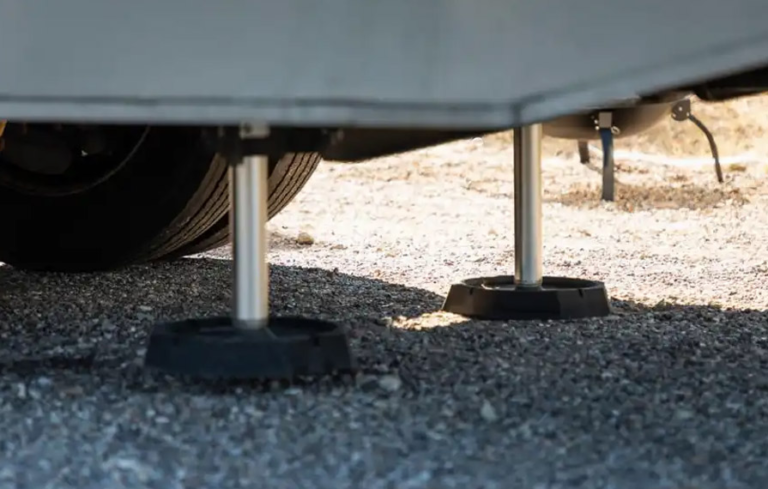
| Scissor stabilizers | Reduce movement and sway | Usually no |
| Electric stabilizer jacks | Reduce movement after leveling | Usually no |
| Tongue jack | Raise or lower a travel trailer coupler | Helps with front-to-back position, but may not be a full leveling system |
A stabilizer is more like a firm hand on a table. It can reduce movement, but it may not be strong enough to raise the RV safely.
Why proper leveling matters
A level RV can improve comfort and reduce strain on some appliances and moving parts. Absorption refrigerators are a common concern. Many manufacturers warn that operating an absorption refrigerator while it is outside its permitted level range can cause damage.
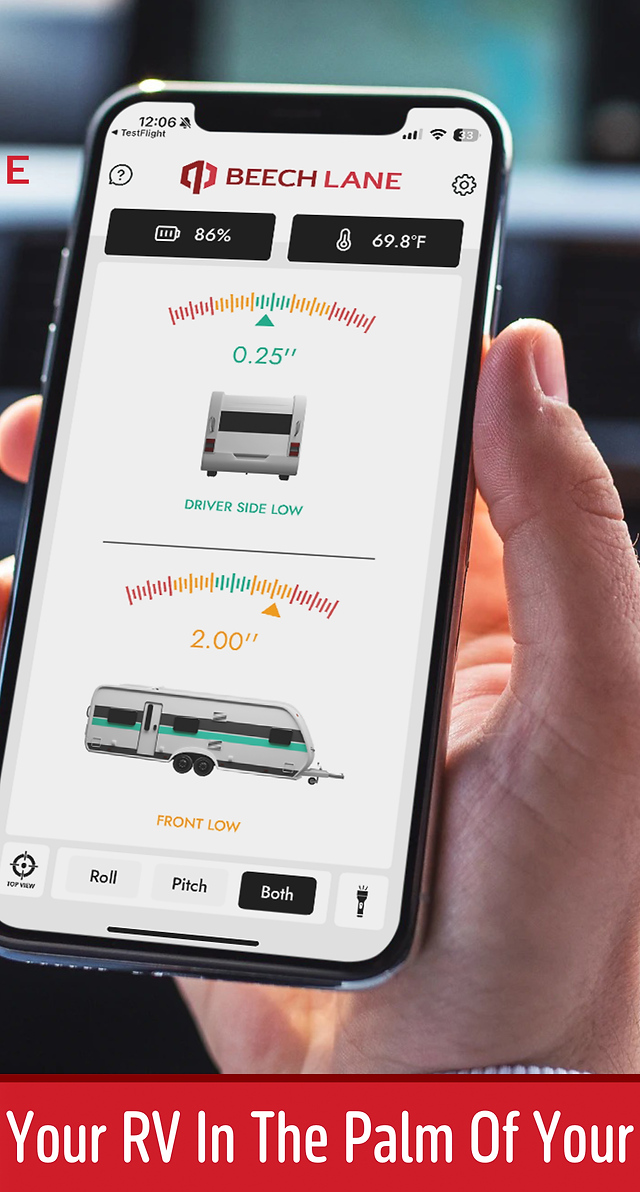
Do not assume a bubble level or phone app gives the exact limit for your refrigerator. Use the refrigerator manual for its stated operating range.
How to Level a Forest River RV Safely
The steps below apply to many Forest River RVs, but the button names and order can vary. Follow the manual for your exact year, model, chassis, and jack brand.
Before you begin
Have these items ready:
- The RV owner’s manual
- The leveling system manual
- Wheel chocks
- A small bubble level or RV leveling device
- A flashlight
- A firm, stable parking surface
- Any required pads or blocks approved by the jack manufacturer
Avoid soft shoulders, unstable soil, deep gravel, steep side slopes, and areas with poor drainage. Watch for underground utilities, septic covers, low branches, and obstacles near the jack feet.
Step 1: Choose the best parking position
Park with the RV’s main living area facing the most level direction. A small change in parking position can reduce the amount of work the jacks must do.
For a towable RV, keep the trailer or fifth wheel attached to the tow vehicle until the manufacturer’s procedure tells you to disconnect. Some systems require the tow vehicle to remain connected during part of the leveling process.
Step 2: Secure the RV
Put the transmission in Park for an automatic vehicle or follow the chassis manual for a manual transmission. Set the parking brake.
Place wheel chocks on the wheels before operating the jacks. Chocks help stop movement, but they do not replace the parking brake or a proper leveling procedure.
Step 3: Disconnect power and utility connections when needed
Before moving the RV or extending equipment, disconnect shore power, water, sewer, and other connections that could become tight.
Check slide-out clearances. Some manufacturers require the RV to be leveled before slide-outs extend. Others specify a different sequence. The Forest River manual and slide-out manual control here.
Step 4: Use the leveling control
For an automatic system:
- Turn on the control panel.
- Confirm the parking brake or required safety conditions.
- Select automatic leveling.
- Stay outside the RV and watch every jack.
- Stop the process if a jack foot shifts, sinks, contacts an obstacle, or behaves unevenly.
For a manual system, make small corrections. Level the low side first when the manual allows it, then correct the front-to-back angle. Do not hold a switch longer than needed.
Step 5: Check the result
Use a level on a firm interior surface. Check both:
- Side to side
- Front to back
Also check that:
- All jack feet sit firmly on the ground or approved pads
- No jack is close to its maximum extension
- The tires remain supported as required by the manual
- The entry door opens and closes normally
- Slide-outs have the required clearance
- The RV does not rock or shift
Step 6: Extend stabilizers and slides in the correct order
After the RV is level, extend stabilizers if the system uses separate stabilizers. Then operate slide-outs only in the order listed by the manufacturer.
Some RV makers advise extending slides only after leveling. Other designs use different instructions. The correct order is not universal.
How to Level a Fifth Wheel or Travel Trailer
Towable RVs need extra care because their jacks have different jobs.
Fifth-wheel procedure
A common fifth-wheel sequence is:
- Select a stable site.
- Chock the trailer wheels.
- Keep the fifth wheel attached until the landing-gear procedure permits unhitching.
- Lower the front landing gear.
- Unhitch from the tow vehicle.
- Adjust the front landing gear to level the trailer from front to back.
- Use approved rear stabilizers to reduce movement.
- Extend slide-outs according to the owner’s manual.
Do not use rear stabilizers to raise the entire fifth wheel. Many are designed to stabilize, not lift.
Travel-trailer procedure
A common travel-trailer sequence is:
- Park and chock the wheels.
- Level side to side with drive-on leveling blocks if needed.
- Keep the trailer connected until the tongue-jack procedure allows disconnection.
- Lower the tongue jack to level front to back.
- Place stabilizers on firm pads.
- Apply only the pressure needed to reduce movement.
- Extend slide-outs only as directed.
If the trailer needs a large side-to-side correction, it is usually better to reposition the trailer or use properly rated leveling blocks. Do not expect small stabilizer jacks to correct a major slope.
What Do the Buttons and Error Messages Mean?
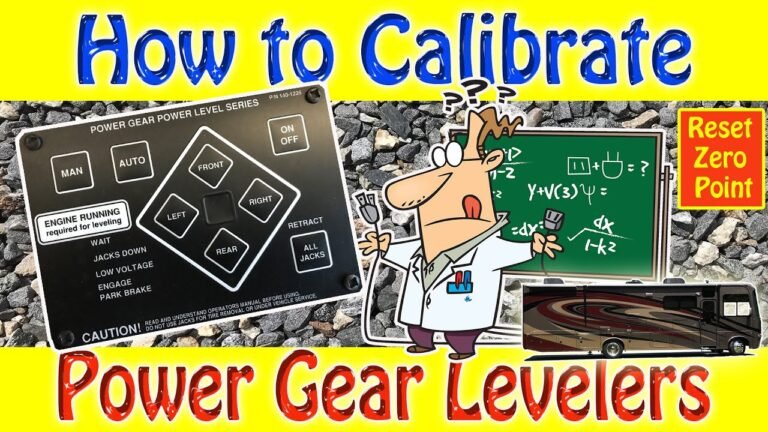
The exact display depends on the system, but common controls include:
- Power: Turns the panel on.
- Auto level: Runs a programmed leveling cycle.
- Front: Raises or lowers the front jacks.
- Rear: Raises or lowers the rear jacks.
- Left/right: Corrects side-to-side tilt on some systems.
- Retract all: Stores the jacks.
- Enter or reset: Used by some systems during calibration or error clearing.
Common messages include:
- Low voltage: Battery power may be too low.
- Jacks down: One or more jacks may still be extended.
- Out of stroke: A jack may be near its extension limit.
- Excess angle: The site may be too steep for the system.
- Sensor error: A level sensor or wiring connection may have a fault.
- Communication error: The control panel may not be communicating with a motor, valve, or controller.
Do not clear an error repeatedly without finding the cause. A reset may remove the message without repairing the problem.
Forest River RV Leveling System Troubleshooting
Start with the safest and easiest checks. Do not crawl under an RV supported only by hydraulic or electric jacks.
The system will not turn on
Possible causes include:
- Low house-battery voltage
- A tripped fuse or circuit breaker
- The parking brake is not set
- The ignition is not in the required position
- A safety interlock is active
- A loose ground or connector
- A failed control panel
Check the battery voltage using the RV’s approved test point or a meter if you know how to use one safely. Then inspect the labeled fuse and breaker locations listed in the manual.
If the display is dark but other 12-volt equipment works, the leveling system may have a dedicated fuse, controller, or ground fault.
The jacks move slowly
Slow movement may result from:
- Low battery voltage
- A weak battery
- Cold temperatures
- Hydraulic fluid below the required level
- A hydraulic leak
- Bent or dirty jack components
- Excessive load or poor ground conditions
For a hydraulic system, check the reservoir only as described in the manual. Use the specified fluid. Do not mix fluids unless the manufacturer allows it.
For an electric jack, listen to the motor. A click without movement may suggest a relay, wiring, motor, or mechanical problem. A grinding sound may indicate mechanical damage.
One jack moves but another does not
Possible causes include:
- A failed motor
- A damaged wire
- A bad relay
- A hydraulic valve problem
- A seized jack
- A control-board fault
Stop using the system if the RV begins to twist, lean, or shift. Operating one side while another jack is stuck can create an unstable load.
The RV becomes unlevel after leveling
If the RV is level at first but later moves, check:
- Soft ground under a jack foot
- A sinking block or pad
- Loose wheel chocks
- A leaking hydraulic jack
- A jack that did not fully contact the ground
- Movement caused by slide-outs
- A damaged or drifting level sensor
Retract the system only after the RV is secure. If the site is soft, reposition the RV or use an approved support method. Never place random wood scraps under a loaded jack.
The system says “retract,” but a jack stays down
First, check the battery and listen for motor activity. Then inspect the jack for an obstruction.
Hydraulic jacks may need the proper retract procedure, fluid level, and return pressure. Electric jacks may need a manual override, but the location and tool vary by model.
Use the manufacturer’s manual override instructions. If the jack will not retract, keep people away from pinch points and arrange service rather than forcing the jack.
How to Reset or Calibrate the Leveling System
A reset and a calibration are different actions.
- Reset: Clears or restarts the controller.
- Calibration: Teaches the system what “level” means.
Only calibrate on a surface that you have confirmed is level. If the calibration surface is not level, the system may work correctly according to a false reference.
A typical calibration process may involve:
- Manually leveling the RV.
- Turning on the control panel.
- Entering a calibration mode.
- Saving the level position.
- Retracting or cycling the system.
The exact button sequence is system-specific. Lippert, HWH, Power Gear, and other manufacturers use different procedures, and Forest River models can change from year to year.
If the RV repeatedly levels in the wrong direction, the level sensor may be loose, damaged, incorrectly mounted, or out of calibration. Check the service manual before replacing parts.
How to Maintain a Forest River RV Leveling System
Regular care can reduce jack problems.
Hydraulic systems
Check:
- Hydraulic fluid level
- Fluid leaks near hoses, fittings, and jack seals
- Damaged hoses
- Corrosion
- Bent jack shafts
- Loose mounting hardware
Keep the system clean. Use only the fluid and maintenance steps listed by the manufacturer.
Electric systems
Check:
- Battery condition
- Fuse and breaker condition
- Wiring and grounds
- Motor sounds
- Loose mounting bolts
- Corrosion at connectors
- Damaged switches or control panels
Protect exposed components from road spray where the manual permits. Do not coat electrical connectors with an unapproved product.
All systems
Before each trip:
- Confirm every jack is fully retracted.
- Check the dashboard warning light.
- Look for damaged feet or pads.
- Test the system at a safe campsite.
- Keep the manual in the RV.
- Learn the manual override procedure before an emergency.
Never lubricate a jack unless the manufacturer specifies the lubricant and location. Some systems can be damaged by the wrong grease or oil.
Choosing the Right Replacement Jack or Part
Buy parts by exact system information, not only by RV brand.
Record:
- Forest River brand and model
- Model year
- VIN or serial number
- Chassis type
- Jack manufacturer
- Jack model or part number
- Voltage
- Weight rating
- Mounting dimensions
- Connector style
- Hydraulic or electric design
A part that fits the same Forest River model name may not fit every production year. Factory changes and chassis differences can affect wiring, brackets, sensors, and control modules.
Contact Forest River or the jack-system manufacturer when the part number is unclear. A qualified RV technician should handle structural repairs, hydraulic repairs under pressure, wiring faults, and any repair that requires working beneath a supported RV.
Safety Rules You Should Not Skip
Use these rules every time:
- Chock the wheels before operating the system.
- Set the parking brake when required.
- Keep people away from moving jacks.
- Never place any part of your body under an RV supported only by leveling jacks.
- Use only rated pads and blocks.
- Keep jack feet clear of holes, edges, and soft soil.
- Do not lift wheels off the ground unless the manufacturer specifically permits it.
- Do not use stabilizers as lifting jacks.
- Stop if the RV shifts, twists, or leans.
- Follow the manual for slide-out timing.
- Keep children and pets away from the control area.
- Use a qualified technician for unsafe or unclear repairs.
Leveling jacks are not a substitute for a jack stand, axle stand, or other approved service support. If you must work beneath the RV, use the support method specified by the chassis or service manual.
Key Takeaways
- Forest River RVs use different leveling and stabilizing systems.
- Identify the exact jack brand and model before troubleshooting.
- Hydraulic or dedicated electric leveling systems may level the RV.
- Scissor and rear stabilizer jacks usually reduce movement but do not level the RV.
- Chock the wheels and follow the correct towable or motorhome sequence.
- Check battery power, fuses, fluid, wiring, and ground contact before replacing parts.
- Never crawl under an RV supported only by its leveling jacks.
- The exact owner’s manual is the final authority for button sequences, limits, and calibration.
Frequently Asked Questions
Does every Forest River RV have an automatic leveling system?
No. Some Forest River motorhomes and larger towables have automatic systems. Many travel trailers use a tongue jack and separate stabilizers. Some fifth wheels use electric or hydraulic landing gear with manual or automatic controls.
Can I use stabilizer jacks to level my travel trailer?
Usually, no. Stabilizers are generally made to reduce movement after the trailer is level. Use proper leveling blocks, the tongue jack, or a dedicated leveling system for major corrections.
Why does my RV leveling system need the engine running?
Some motorhome systems require the engine to run so the alternator can support system voltage. Others require the engine to be off. Follow the control-panel label and the chassis or leveling-system manual.
Should the tires come off the ground when leveling?
Do not assume they should. Tire contact helps maintain stability on many RVs. Use the exact instructions for your system. If a normal leveling cycle lifts a wheel unexpectedly, stop and inspect the setup.
How do I find the correct leveling-system manual?
Look for the system brand and model on the control panel, jack body, hydraulic pump, motor, or wiring label. Then check Forest River’s owner resources and the equipment manufacturer’s support documents. The RV manual may list the system, but the jack manufacturer’s manual may contain the detailed service procedure.
When should I call an RV technician?
Call for service when a jack leaks, a jack will not retract, the RV shifts during operation, a controller repeatedly fails, wiring is damaged, or the repair requires working under the RV. Stop using the system until it is safe.
Conclusion
A Forest River RV leveling system is useful only when each jack is used for its intended purpose. Start with wheel chocks, a stable site, and the exact manual for your RV and jack system. Make small corrections, watch the jacks while they move, and stop at the first sign of sinking, shifting, leaking, or unusual noise.
Your next step is to photograph the control panel and jack labels, then record the RV model year and system part number. That information will make future troubleshooting and parts research much safer and more accurate.