
What Type Of Hydraulic Fluid For RV Leveling System: Guide
Most RV leveling systems use Dexron III or Mercon automatic transmission fluid, but the owner’s manual always comes first.
Choosing what type of hydraulic fluid for RV leveling system maintenance is more important than it may seem. The wrong fluid can cause slow jacks, noisy pumps, seal damage, or costly hydraulic repairs. This guide explains the common fluid types, how to check your system, what to avoid, and how to fill the reservoir safely.

What Type of Hydraulic Fluid for RV Leveling System Is Usually Recommended?
For many motorhome leveling systems, the recommended fluid is an automatic transmission fluid, often Dexron III or Mercon ATF. Some systems use a manufacturer-approved hydraulic oil instead. The correct choice depends on the pump, seals, operating temperature, and brand of leveling equipment.
The safest answer to what type of hydraulic fluid for RV leveling system is this: use the exact fluid listed in the leveling system manual. The RV manufacturer and the leveling system manufacturer may be different companies, so check both manuals when possible.
Common recommendations include:
• Dexron III automatic transmission fluid
• Mercon automatic transmission fluid
• Dexron/Mercon-compatible ATF
• Manufacturer-approved synthetic hydraulic fluid
• Special low-temperature hydraulic fluid for cold climates
Never assume that all RV leveling systems use the same oil. Two motorhomes built in the same year may have different pumps and different fluid requirements.
Why ATF Is Common in RV Leveling Systems
Automatic transmission fluid offers several useful properties for hydraulic equipment. It provides lubrication, helps control heat, protects metal parts, and works well with many hydraulic seals.
ATF also contains additives that help reduce oxidation, foaming, rust, and wear. These features make it suitable for many hydraulic leveling pumps, especially older systems designed around Dexron specifications.
Still, ATF is not automatically correct for every RV. A fluid can look suitable and still have the wrong viscosity or additive package for a particular pump.
How to Identify Your RV Leveling System
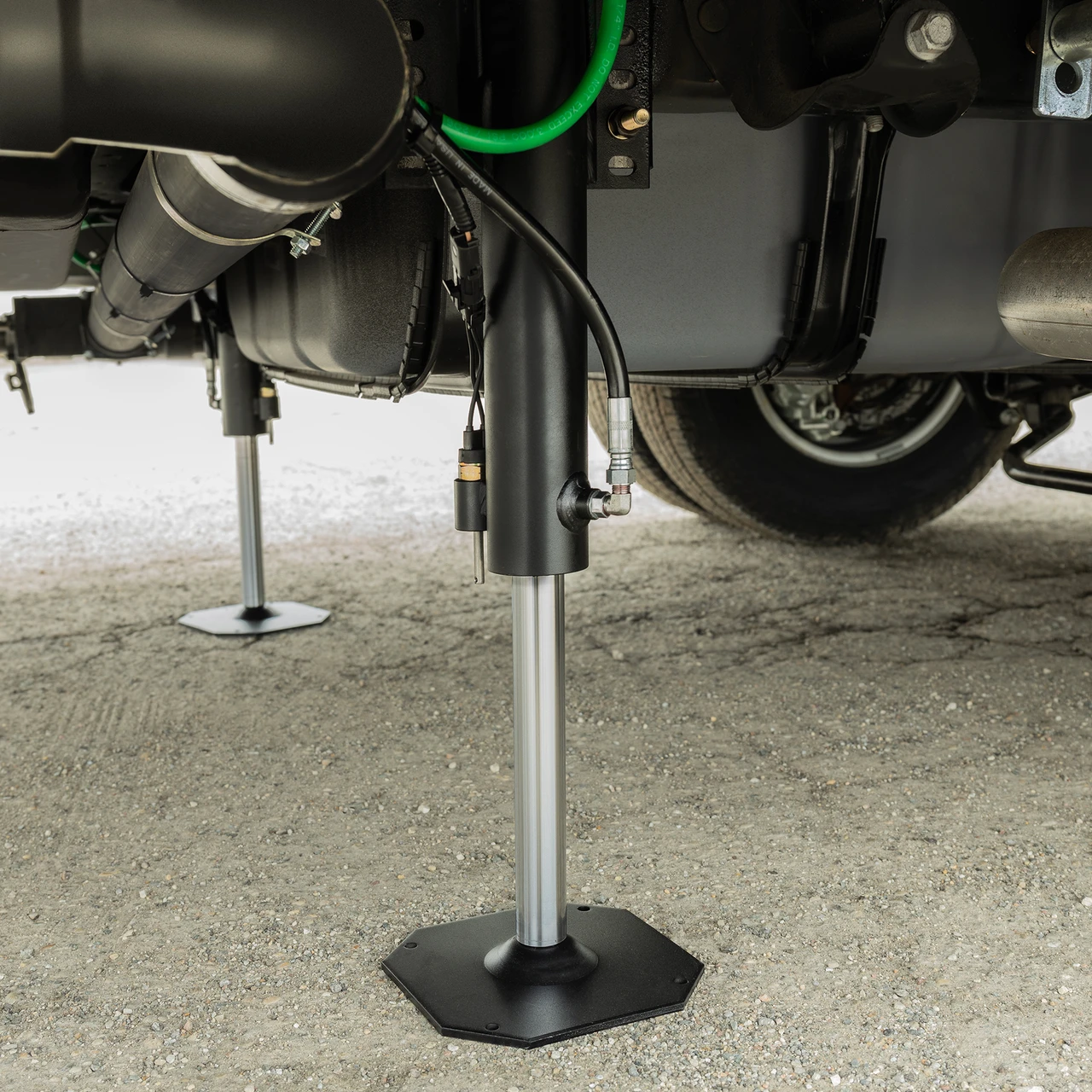
Before buying fluid, identify the leveling system brand and model. The name may appear on the pump, hydraulic reservoir, jack body, control panel, or owner’s documents.
Common RV leveling system brands include:
• HWH
• Lippert
• Power Gear
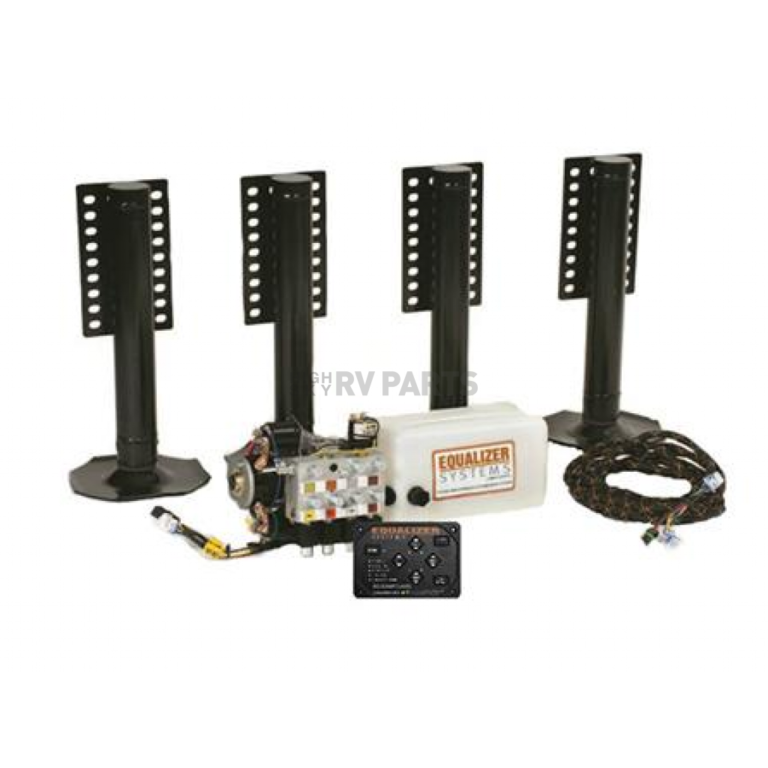
• Equalizer Systems
• Bigfoot
• Ground Control
Look for a model number, service label, or fluid specification near the reservoir. Some labels state “ATF,” “Dexron III,” or “hydraulic oil.” Others direct you to a service manual.
If the label is missing, use this process:
-
Park the RV on a firm, level surface.
-
Photograph the pump, reservoir, control panel, and jack assemblies.
-
Search the model number in the manufacturer’s service literature.
-
Contact the manufacturer or a qualified RV technician.
-
Confirm the fluid before adding anything to the tank.
This step may take a few minutes, but it can prevent a major repair. A hydraulic system is like a circulatory system. The pump moves the fluid, the lines carry it, and the jacks use pressure to lift the coach. The wrong fluid can affect every part of that process.

What Fluid Do Major RV Leveling Systems Use?
Manufacturers can change specifications over time, so always verify the current manual. However, these general examples can help you understand the market.
HWH Leveling Systems
Many HWH systems specify Dexron automatic transmission fluid or another approved fluid. Some older manuals mention Dexron II or Dexron III. Newer fluid recommendations may differ by system and climate.
Do not mix products blindly. If your HWH manual lists a specific fluid, follow that instruction instead of relying on a general recommendation.
Lippert Level Up Systems
Lippert systems may use approved hydraulic fluid or ATF, depending on the model. Some Level Up and hydraulic slide systems share similar fluid requirements, but that does not mean every Lippert system uses the same product.
Check the reservoir label and model-specific manual before topping off the tank.
Power Gear Systems
Many Power Gear leveling systems use Dexron III or an equivalent automatic transmission fluid. Some systems may allow a different fluid in cold conditions or after a design update.
If the system is older, confirm whether the original Dexron specification has been replaced by a compatible modern fluid.
Equalizer Systems
Equalizer Systems may specify automatic transmission fluid or a particular hydraulic oil based on the equipment model. The correct answer to what type of hydraulic fluid for RV leveling system will depend on the pump and valve design.
When in doubt, contact Equalizer Systems with the serial number or model information.

Can You Use Hydraulic Oil Instead of ATF?
Sometimes, but only when the manufacturer approves it. Hydraulic oil and ATF are not identical products, even though both can power hydraulic equipment.
Hydraulic oil is made for hydraulic pumps, valves, cylinders, and motors. ATF is also a hydraulic fluid, but it contains friction modifiers and other additives designed for automatic transmissions.
Using hydraulic oil in a system designed for ATF may change seal performance, pump noise, pressure control, or cold-weather operation. Likewise, using ATF in a system designed for a special hydraulic oil may create similar problems.
The answer to what type of hydraulic fluid for RV leveling system should never be based only on fluid color. Red fluid is often ATF, but color does not prove that the fluid meets the required specification.
Use hydraulic oil only when:
• The owner’s manual approves it
• The pump manufacturer lists it
• A qualified technician confirms compatibility
• The fluid has the correct viscosity and additive package

Fluids You Should Not Use
Some fluids can damage seals, reduce lubrication, or create unsafe system behavior. Avoid adding a product simply because it is available in the garage.
Do not use these fluids unless the manufacturer specifically approves them:
• Brake fluid
• Power steering fluid
• Engine oil
• Gear oil
• Tractor hydraulic fluid
• Cooking oil or vegetable oil
• Universal hydraulic fluid with no listed specification
Brake fluid is especially dangerous in this situation. It has a different chemical makeup and can quickly damage hydraulic seals that were designed for ATF or hydraulic oil.
Also avoid mixing unknown fluids. If the reservoir already contains contaminated or unidentified fluid, draining and flushing the system may be safer than topping it off.

How to Check the Hydraulic Fluid Level
Check the fluid level with the RV in the position recommended by the manufacturer. Some systems require the jacks to be fully retracted. Others specify a different position.
Follow these steps:
-
Park on solid, level ground.
-
Retract all leveling jacks unless the manual says otherwise.
-
Turn off the engine and the leveling system.
-
Clean dirt from around the reservoir cap.
-
Remove the cap carefully.
-
Check the dipstick or fluid mark.
-
Add the approved fluid in small amounts.
-
Recheck the level without overfilling.
A low reservoir can allow air to enter the pump. Air may cause whining, foaming, uneven jack movement, or repeated failure to hold pressure.
Do not fill the reservoir to the top unless the instructions say to do so. Hydraulic fluid expands as it warms. An overfilled tank can leak when the system reaches operating temperature.
How to Add Hydraulic Fluid Safely
Use a clean funnel and a sealed container of the correct fluid. Even a small amount of dirt can damage valves and pump components.
Wipe the cap and filler neck before opening the reservoir. Keep the container closed when you are not pouring. Do not use a funnel that has held motor oil, coolant, or other chemicals.
Add fluid slowly. Pause between additions so the fluid can settle in the tank. After reaching the proper level, operate the leveling system according to the manual and inspect the reservoir again.
Wear gloves and safety glasses. Hydraulic fluid can irritate skin and eyes, and pressurized leaks can be dangerous. Never place your hand near a suspected pinhole leak. A high-pressure stream can enter the skin and requires immediate medical care.
Signs You Have the Wrong or Contaminated Fluid
The wrong hydraulic fluid may not cause instant failure. Problems can develop slowly as seals swell, fluid foams, or the pump loses efficiency.
Watch for these signs:
• Leveling jacks move more slowly than usual
• The pump sounds loud or strained
• Fluid looks milky or foamy
• The reservoir smells burnt
• Jacks drift down after reaching position
• Hydraulic lines or fittings begin to leak
• The system works poorly in cold weather
• The fluid changes color or contains particles
A small amount of darkening does not always mean the fluid is unusable. However, a burnt smell, metal particles, or thick sludge suggests contamination or component wear.
If symptoms appear after adding a new fluid, stop using the system until the fluid is identified. Continuing to operate the pump may spread contamination through the valves and cylinders.
Can Different Hydraulic Fluids Be Mixed?
Only mix fluids when the manufacturer or fluid supplier confirms compatibility. Dexron III and a modern fluid labeled as a direct Dexron replacement may be compatible, but that does not mean every ATF or hydraulic oil can be combined.
Mixing can change viscosity and additive performance. It may also cause foaming or seal problems. The risk is higher when one fluid is synthetic and the other is mineral-based, or when the fluids have different specifications.
If you do not know what is already in the reservoir, do not guess. A repair shop can identify the fluid, drain the tank, clean the system, and refill it with the correct product.
This is one of the most important lessons in what type of hydraulic fluid for RV leveling system maintenance: compatibility matters more than brand name or price.
Best Hydraulic Fluid for Cold Weather
Cold weather makes hydraulic fluid thicker. Thick fluid moves more slowly and places extra strain on the pump. This can cause slow leveling or a loud startup noise.
If you camp in freezing weather, look for the cold-temperature guidance in your manual. Some manufacturers approve synthetic ATF or a low-temperature hydraulic fluid for winter use.
Do not switch to a thinner fluid without approval. A fluid that flows well when cold may not protect the pump properly when hot. The correct product must work across the full temperature range of your RV travels.
Before leveling in very cold weather:
• Let the RV warm up if the manufacturer allows it
• Keep the fluid reservoir protected from dirt and water
• Avoid repeated pump operation without rest
• Watch for slow movement or unusual noise
• Stop if the pump becomes excessively loud
A Practical Maintenance Routine
Good fluid care can extend the life of the pump, valves, hoses, and jacks. It also helps you find small problems before they become expensive.
Use this basic routine:
-
Inspect the reservoir at the start of each travel season.
-
Check for leaks around hoses, fittings, and jack seals.
-
Confirm that the fluid level is correct.
-
Look for foam, water, sludge, or metal debris.
-
Wipe dirt from the filler cap before opening it.
-
Follow the manufacturer’s fluid change interval.
-
Record the product name and date of service.
There is no universal replacement interval for every RV leveling system. Some manuals give a time or operating-hour schedule. Others focus on fluid condition and system performance.
One practical lesson from RV service work is that small leaks rarely fix themselves. A damp jack seal or oily fitting may seem minor at first, but low fluid can eventually pull air into the pump. Fix the leak before simply adding more fluid.
Common Mistakes to Avoid
Many hydraulic problems begin with a simple shortcut. The most common mistake is choosing fluid by color or convenience instead of by specification.
Avoid these errors:
• Adding fluid without checking the manual
• Filling the tank while the jacks are extended
• Using an unmarked “universal” oil
• Mixing fluids from different specifications
• Ignoring a leaking hose or jack seal
• Overfilling the reservoir
• Operating the pump with very low fluid
• Using dirty tools or funnels
• Changing fluid without finding the cause of contamination
A helpful habit is to write the approved fluid type on a label near the reservoir. This can prevent confusion when you are traveling or when another person performs maintenance.
When to Call an RV Technician
You can often check the level and add approved fluid yourself. More serious problems require trained service.
Contact an RV technician if:
• The pump runs but the jacks do not move
• A jack slowly retracts or extends by itself
• The fluid becomes milky or heavily foamy
• A hose has a cut, bulge, or serious leak
• The pump makes grinding or banging sounds
• The reservoir repeatedly loses fluid
• You accidentally add brake fluid or an unknown chemical
• You need to flush contaminated fluid
Hydraulic pressure can remain in a system even after the pump is turned off. A technician has the tools and procedures needed to release pressure safely and test the system.
The cost of professional diagnosis is usually far lower than replacing a pump, valve manifold, or multiple hydraulic cylinders.
Frequently Asked Questions About What Type of Hydraulic Fluid for RV Leveling System
Is Dexron III ATF suitable for an RV leveling system?
Dexron III ATF is suitable for many RV leveling systems, especially older HWH, Power Gear, and similar systems. Confirm the recommendation in your specific manual before using it.
Can I use synthetic ATF in my RV leveling system?
Synthetic ATF may be acceptable if it meets the specification listed by the leveling system manufacturer. Do not choose synthetic fluid only because it is considered higher quality.
What happens if I use the wrong hydraulic fluid?
The wrong fluid may cause leaks, foaming, slow jack movement, seal damage, or pump wear. If you added an incorrect fluid, stop operating the system and ask a qualified technician about draining and flushing it.
Should RV leveling jacks be extended when checking fluid?
Many systems should be checked with the jacks fully retracted, but instructions vary. Follow the leveling system manual because the fluid level changes as the cylinders extend and retract.
Can I mix Dexron III with hydraulic oil?
Do not mix Dexron III with hydraulic oil unless the manufacturer confirms that the products are compatible. When the existing fluid is unknown, a complete drain and refill is the safer option.
How often should I change RV leveling system fluid?
The service interval depends on the brand, model, usage, and fluid condition. Follow the manufacturer’s schedule and change the fluid sooner if it is contaminated, burnt, or full of debris.
Is red hydraulic fluid always automatic transmission fluid?
No. Fluid color is only a dye and does not identify the chemical specification. Always read the label and compare it with the requirements in your RV leveling system manual.
Conclusion
The best answer to what type of hydraulic fluid for RV leveling system care is the fluid approved for your exact pump and jack system. Dexron III or Mercon ATF is common, but some systems require a specific hydraulic oil or synthetic product.
Check the manual, identify the system brand, keep the reservoir clean, and never guess when the fluid is unknown. A few careful minutes before adding oil can protect the pump, seals, valves, and leveling jacks for years. Save your system’s fluid specification in your RV records, and share your model or maintenance experience in the comments.
6 Comments