Beech Lane RV Leveling System Reviews: Honest Buyer Guide
Beech Lane RV leveling products are often considered by U.S. campers who want a simpler way to level a travel trailer, fifth wheel, or motorhome. The key question is not only whether the system receives good reviews. It is whether the exact Beech Lane product matches your RV’s weight, wheel setup, ground conditions, and leveling needs.
The biggest buying mistake is confusing leveling with stabilizing. Leveling blocks and ramps help raise one side of an RV. Stabilizer pads help reduce movement after the RV is already level. Neither should replace the trailer’s rated tongue jack, landing gear, axle support, or the manufacturer’s setup instructions.
This guide explains how to judge Beech Lane RV leveling system reviews, what feedback usually means, how to check compatibility, and when another type of leveling product may be safer or more practical.
Quick Takeaways
- Beech Lane may be a practical option for RV owners who want portable leveling gear at a moderate cost.
- Reviews should be judged against the exact model, not the Beech Lane brand name alone.
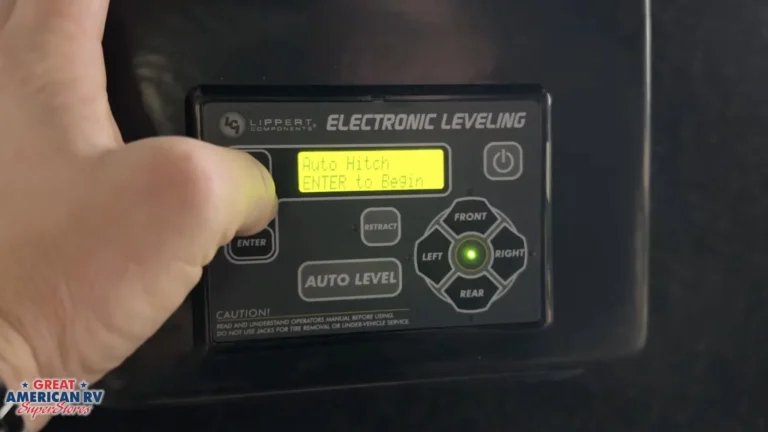
- A leveling block system is not the same as an automatic hydraulic leveling system.
- Check load rating, dimensions, height range, surface grip, storage size, and return terms before buying.
- Never use leveling blocks, ramps, or stabilizer pads beyond their stated capacity.
- Use wheel chocks and follow the RV manufacturer’s leveling sequence every time.
- If your RV needs large height changes, has a heavy slide-out layout, or moves a lot after setup, a different system may be a better fit.
What Is a Beech Lane RV Leveling System?
A Beech Lane RV leveling system generally refers to portable equipment used to adjust an RV’s side-to-side or front-to-back position. Depending on the listing, the product may include leveling blocks, ramps, jack pads, chocks, or related accessories.
The term “system” can be misleading. A portable block kit does not automatically sense the RV’s angle or raise the coach by itself. It normally requires the driver to position the RV, place the blocks, and confirm level with a bubble level or electronic leveling tool.
RV leveling products usually fall into four groups:
| Product type | Main purpose | Common use |
|---|---|---|
| Leveling blocks | Raise a low wheel or jack point | Correcting side-to-side imbalance |
| Leveling ramps | Let the RV climb to a target height | Travel trailers and motorhomes |
| Jack pads | Spread load under a jack | Soft soil, gravel, or wet ground |
| Stabilizer pads | Reduce sinking and movement | Supporting stabilizer feet |
A good review should identify which type is being discussed. A buyer looking for a ramp may be disappointed by a flat pad. A buyer looking for less rocking may not solve the problem with a leveling block alone.
Leveling is not stabilizing
Leveling makes the RV more even. Stabilizing limits movement after the RV is parked and leveled.
For example, a trailer may be level but still shake when someone walks inside. That movement can result from flexible suspension, loose stabilizer jacks, soft ground, or tires that remain loaded. Adding a larger leveling block may not fix the cause.
What Beech Lane Reviews Can Tell You
Beech Lane RV leveling system reviews are most useful when they describe a specific RV, surface, setup method, and result. Short comments such as “works great” or “too small” provide little help without context.
Look for reviews that answer these questions:
- What type of RV was used?
- What was the approximate loaded weight?
- Was the product used on concrete, asphalt, gravel, sand, or soil?
- Did the reviewer use it for leveling, stabilizing, or both?
- Did the product fit the tires or jack feet?
- Was it easy to stack, clean, and store?
- Did it deform, crack, slide, or sink?
- Was the product used within its stated capacity?
- Did the reviewer explain how much height was needed?
- Was the product returned or replaced?
Reviews are observations, not controlled tests. One owner’s successful use on a small travel trailer does not prove that the same product is suitable for a heavier fifth wheel. Likewise, one report of failure may involve soft ground, an overloaded RV, poor placement, or an unusual setup.
Positive review themes
Positive reviews may indicate that buyers like the product’s:
- Light weight
- Simple setup
- Compact storage
- Ease of cleaning
- Stackable design
- Grip on firm surfaces
- Fit under stabilizer feet
- Use with common travel trailers
- Lower cost compared with powered leveling equipment
These are useful advantages for weekend campers and owners who set up on improved campsites.
Negative review themes
Critical reviews often point to one of five issues:
- The product was used on ground that was too soft.
- The height range was too small.
- The blocks or ramps moved under load.
- The pieces were too large for the storage compartment.
- The buyer expected automatic leveling or full trailer stabilization.
A negative review deserves more attention when several owners report the same issue under similar conditions. A single complaint is less conclusive when the product was used outside its stated purpose.
How to Judge a Beech Lane Leveling Product
The best Beech Lane RV leveling system is the one that fits your RV and campsite conditions. Use the following checks before relying on review averages.
1. Confirm the exact product
Beech Lane sells more than one type of RV accessory. Product names can also change between retailers or over time.
Before comparing reviews, record:
- Exact product name
- Number of pieces
- Block, ramp, pad, or chock design
- Listed dimensions
- Stated capacity
- Intended use
- Included accessories
- Warranty terms
- Retailer and model number
Do not combine reviews from different products just because they carry the Beech Lane name.
2. Check the loaded RV weight
Use the RV’s actual travel weight when possible. This includes:
- Water
- Propane
- Food
- Tools
- Camping gear
- Passengers
- Bikes
- Hitch weight
- Cargo stored in exterior compartments
Do not size a leveling product only from the RV’s empty or dry weight.
For a towable RV, the load on the leveling equipment can vary by position. A block under one wheel may support only part of the RV’s total weight, but that does not mean the total rating can be ignored. Dynamic forces, uneven ground, tire placement, and poor contact can increase stress.
If the product’s published capacity is unclear, contact the manufacturer before use. Do not assume that a larger-looking block has a higher safe capacity.
3. Measure the height you usually need
A small adjustment may require only one block or ramp. A sloped site may need more height than a compact kit can provide.
A simple example:
- The low side of the RV needs to rise by about 3 inches.
- One leveling piece provides roughly 1 inch of usable lift.
- The setup may need three pieces, depending on the product design and stacking rules.
This is only a planning example. Use the manufacturer’s actual dimensions and stacking instructions. Some blocks are designed to interlock. Others are not safe to stack.
Never place a loose stack under a tire if the product is not designed for stacking. A stack that shifts can damage the tire, suspension, block, or campsite surface.
4. Examine the contact area
The tire contact area should sit fully on the ramp or block. A narrow contact patch can create a tipping or slipping risk.
Check:
- Tire width
- Ramp width
- Block length
- Sidewall clearance
- Surface texture
- Edge shape
- Clearance around the wheel
- Space for the tow vehicle or motorhome
The product must also fit beneath the intended jack foot or stabilizer foot if you plan to use it as a pad.
5. Consider the ground
Ground conditions often matter more than brand name.
| Ground condition | Main concern | What to look for |
|---|---|---|
| Concrete | Sliding or surface damage | Grip and stable contact |
| Asphalt | Heat and softening | Broad support area |
| Gravel | Sinking and uneven contact | Thick, wide pads |
| Packed soil | Compression after rain | Load distribution |
| Sand | Deep sinking | Large footprint or specialized support |
| Wet grass | Low traction and soft soil | Chocks and broad support |
A product that performs well on a paved RV pad may sink on wet soil. The safest setup may require a wider support pad beneath the leveling product, but only when the manufacturer allows that arrangement.
6. Check storage space
Portable leveling equipment must travel somewhere. Measure the storage compartment before ordering.
Account for:
- The packed length
- The packed width
- The packed height
- Dirt and water on the product
- Gloves and a storage bag
- Space needed for wheel chocks
- Access during campsite setup
A kit that fits the RV but blocks other essential gear may become frustrating to use.
Beech Lane RV Leveling System Pros and Cons
Beech Lane products may suit buyers who want a portable and simple setup, but they have limits that powered or built-in systems do not.
Potential advantages
Simple operation: Portable blocks and ramps normally do not need wiring, batteries, motors, or an app.
Lower installation burden: A portable kit can usually be carried between RVs and does not require permanent installation.
Flexible use: Depending on the design, one kit may help with wheels, stabilizer feet, or jack feet.
Easy replacement: Individual pieces may be easier to replace than a damaged built-in jack component.
Useful for occasional camping: Owners who camp a few times each season may not need an automatic hydraulic system.
Potential disadvantages
Manual placement: The RV may need to be moved on and off the blocks several times.
Limited lift range: Portable products may not correct a steep site.
Ground dependence: Soft or uneven ground can reduce stability.
Storage needs: A complete kit can take up valuable cargo space.
No automatic correction: The user must judge level and position the RV.
Possible mismatch with heavy RVs: A product suitable for a smaller trailer may not be suitable for a large fifth wheel or motorhome.
The main trade-off is simple: portable systems are usually easier to buy and move, while built-in systems offer more convenience but cost more and require greater installation or maintenance.
Are Beech Lane Leveling Blocks Safe?
Beech Lane leveling blocks can be safe when used within their rated limits and placed on suitable ground. No brand of portable leveling equipment should be treated as a substitute for wheel chocks, proper jack placement, or the RV maker’s instructions.
Follow this basic safety sequence:
- Choose the most level campsite available.
- Keep people clear while positioning the RV.
- Apply the parking brake on a motorhome.
- Place wheel chocks before disconnecting a trailer.
- Use the correct hitch and landing gear procedure.
- Place leveling blocks on firm, stable ground.
- Drive or roll onto the blocks slowly.
- Confirm that each tire sits fully on the support surface.
- Use a level inside the RV and check more than one location.
- Lower stabilizers only after the RV is properly supported.
- Recheck the setup after the ground settles.
Never crawl under an RV supported only by leveling blocks, jacks, or stabilizers. Use properly rated stands and follow approved service procedures for under-vehicle work.
Do not use leveling equipment if it is cracked, badly warped, crushed, or damaged by heat, chemicals, or sunlight. Replace damaged pieces rather than placing them where failure could affect a tire or jack.
Beech Lane Versus Other RV Leveling Options
Beech Lane should be compared with the right alternative. A portable leveling kit, a jack pad set, and an automatic hydraulic system solve different problems.
| Option | Best for | Main benefit | Main limitation |
|---|---|---|---|
| Portable blocks | Small height corrections | Low complexity and portability | Manual setup |
| Drive-on ramps | Repeatable wheel height | Faster placement on some sites | Need room to drive onto |
| Jack pads | Preventing jack sink | Spreads load | Does not level the RV alone |
| Stackable pads | Adjustable support | Flexible height | Must follow stacking rules |
| Electric stabilizers | Powered support | Less manual effort | Not a full leveling solution |
| Hydraulic leveling system | Large motorhomes and premium RVs | Fast, integrated leveling | High cost and maintenance |
| Wooden boards | Emergency or budget use | Easy to obtain | Can split, shift, or rot |
Wood can work in limited situations when it is thick, sound, properly sized, and used according to the RV manufacturer’s guidance. However, random scrap wood is not automatically safe. It can break under load or shift on uneven ground.
A portable Beech Lane kit may be the better choice for a smaller trailer that uses maintained campsites. A built-in system may make more sense for a large motorhome owner who sets up often and wants powered operation.
Troubleshooting Common Problems
Most leveling problems come from the campsite, setup method, or product mismatch. Check the simplest and safest causes first.
The RV still feels uneven
Possible causes:
- The low side was not raised enough.
- The bubble level is not mounted accurately.
- The RV floor is not parallel with the frame.
- The product shifted after placement.
- The site is too sloped for the equipment.
What to do:
Recheck level at the same reference points. Confirm that the blocks remain flat and that the tires are fully supported. If the site needs more lift than the product allows, move to a better location rather than creating an unstable stack.
The blocks move or slide
Possible causes:
- Wet or dusty contact surfaces
- Smooth pavement
- A steep approach angle
- Incorrect placement
- Excessive load
- A product not designed for the tire or jack
Clean the contact surfaces and inspect the product. Confirm that the blocks are aligned with the direction of travel. Do not improvise with loose pieces if the manufacturer requires an interlocking arrangement.
The RV rocks after leveling
Leveling blocks alone may not solve rocking. Check whether the stabilizer jacks are firmly placed and whether their feet are sinking. Verify that the trailer is properly hitched or supported before disconnecting.
Avoid overextending stabilizer jacks. They are normally intended to reduce movement, not lift the full RV or replace the main support system.
The product sinks into the ground
Soft soil, gravel, or wet grass may not support a narrow pad. Move to firmer ground or use a properly rated, broader support surface. Do not assume that adding random boards or thin plastic pieces will improve safety.
A ramp or block cracks
Stop using it at once. Photograph the damage, record the product model, and contact the seller or manufacturer. Do not continue using a cracked product because it appears to be holding the load.
How to Read Beech Lane Customer Reviews
Review volume and star ratings are useful starting points, but they are not enough for a safety-related purchase.
Use this method:
Sort reviews by the exact product
Confirm that reviews belong to the same model, size, and pack count. Retail pages sometimes group related items together.
Read recent critical reviews first
Look for repeated problems involving:
- Cracking
- Slipping
- Sinking
- Poor fit
- Missing parts
- Incorrect dimensions
- Weak interlocking features
- Difficult storage
- Warranty delays
A repeated problem matters more than a single vague complaint.
Separate shipping problems from product problems
A damaged box, late delivery, or missing accessory may be a retailer issue. It still matters to the buyer, but it does not prove that the leveling product failed in use.
Look for verified use details
The most useful reviews state the RV type, campsite surface, number of pieces used, and length of ownership. Reviews without those details should carry less weight.
Compare review claims with documentation
A customer may report that a product supports a certain load, but that is not the same as a manufacturer rating or an independent test. Treat user experiences as reported observations, not certified capacity data.
Buying Checklist
Before ordering a Beech Lane RV leveling system, confirm the following:
- Exact product model and pack size
- Intended use: tire, jack, stabilizer, or landing gear
- Published load rating
- Your RV’s loaded weight
- Tire or jack-foot dimensions
- Maximum supported height
- Whether stacking is allowed
- Surface and traction design
- Packed dimensions
- Storage location in the RV
- Warranty and return terms
- Replacement-piece availability
- Compatibility with your RV manufacturer’s setup instructions
If any safety-critical specification is missing, ask the manufacturer before purchase. Do not fill in an unknown rating by comparing the product with a different brand.
Key Takeaways
Beech Lane RV leveling system reviews can help you judge ease of use, storage, fit, and performance on common campsite surfaces. They cannot replace the product’s instructions or confirm that a system is suitable for every RV.
The most important checks are the exact model, rated capacity, height range, contact area, ground condition, and intended purpose. A portable leveling product may work well for modest corrections, but it will not provide the same convenience or range as an integrated hydraulic system.
For most buyers, the safest next step is to measure the RV’s tire and jack-foot dimensions, estimate the height correction needed, and compare those figures with the current Beech Lane listing and manual.
FAQs
Are Beech Lane RV leveling blocks worth it?
They may be worth considering if you need a portable solution for small leveling corrections and your RV fits the product’s published limits. They may be a poor fit for steep sites, very heavy RVs, soft ground, or buyers who expect automatic leveling.
Can Beech Lane leveling blocks be used under RV tires?
Only if the specific product is designed and rated for tire support. Check the product instructions for tire width, load, placement, and stacking limits. Do not assume that a jack pad or stabilizer pad can safely support a moving tire.
Can I use Beech Lane blocks under stabilizer jacks?
Some products are made for jack or stabilizer feet, while others are intended for tires. Confirm the intended use and the size of the jack foot. The pad must remain stable and fully support the foot.
Do leveling blocks stop RV movement?
They can help create a level base, but they do not always stop rocking. Movement may come from the suspension, stabilizer jacks, soft ground, or tires. Proper chocking and stabilizer setup remain necessary.
How many leveling blocks do I need?
The number depends on the height correction, block design, RV weight, and manufacturer instructions. Measure the usual height difference and confirm whether the pieces may be stacked or interlocked.
Can leveling blocks replace RV jacks?
No. Leveling blocks are not a universal replacement for rated jacks, landing gear, or stabilizers. Use each component only for its intended purpose and follow the RV manufacturer’s support procedure.
Conclusion
Beech Lane RV leveling system reviews are most useful when they are read as evidence about a specific product in a specific setup. The brand name alone does not determine whether a kit is safe or effective for your RV.
Choose the exact model, verify its capacity and dimensions, consider your campsite surfaces, and separate leveling from stabilizing. If the product fits those conditions and your needs are modest, a portable Beech Lane system may be a practical option. If you need major height changes, powered operation, or support for a large coach, compare it with a more robust leveling solution before buying.