
Which Wireless RV Leveling System Is Best: Buying Guide
For most RV owners, Lippert Ground Control 3.0 is the best wireless RV leveling system for fast, reliable setup.
Choosing which wireless RV leveling system is best depends on your RV type, weight, jack layout, and how much automation you want. After comparing electric systems, hydraulic systems, wireless remotes, and phone-based leveling tools, I found that no single kit fits every camper. This guide breaks down the leading options, key features, limits, installation needs, and real-world buying tips so you can choose with confidence.
Which wireless RV leveling system is best overall?
For many fifth-wheel owners, the Lippert Ground Control 3.0 is the best wireless RV leveling system overall. It uses powered electric jacks, automatic leveling routines, a control panel, and a wireless remote. It can reduce setup time and remove much of the guesswork from leveling at camp.
The system is not perfect for every RV. It must match your frame, jack points, wiring, and weight rating. A professional RV technician should confirm compatibility before installation.
Here are the strongest options by use case:
• Best overall for many fifth wheels: Lippert Ground Control 3.0
• Best for travel trailers: Lippert Ground Control TT
• Best wireless leveling aid: LevelMatePRO
• Best heavy-duty hydraulic option: Lippert Level Up or a comparable hydraulic system
• Best for simple manual control: A wireless remote kit matched to your existing system
• Best budget approach: A wireless level sensor combined with quality leveling blocks
The best wireless RV leveling system should do more than move jacks from a distance. It should offer safe load support, clear controls, dependable communication, and parts that are easy to service.

How a wireless RV leveling system works
A wireless RV leveling system uses a remote, smartphone app, or both to control the leveling equipment. The wireless device sends commands to a control module. That module operates electric motors, hydraulic valves, or both.
Most systems include these main parts:
• Control module: Receives wireless commands and directs the jacks.
• Electric or hydraulic jacks: Lift and support the RV.
• Level sensors: Detect the coach angle.
• Wireless remote: Lets you operate the system outside the RV.
• Interior control panel: Provides a backup control method.
• Wiring harness: Connects the battery, motors, sensors, and controller.
Electric systems use motors at each jack. They are often easier to install and maintain. Hydraulic systems use a pump and fluid lines, which can provide strong and fast movement on large motorhomes and fifth wheels.
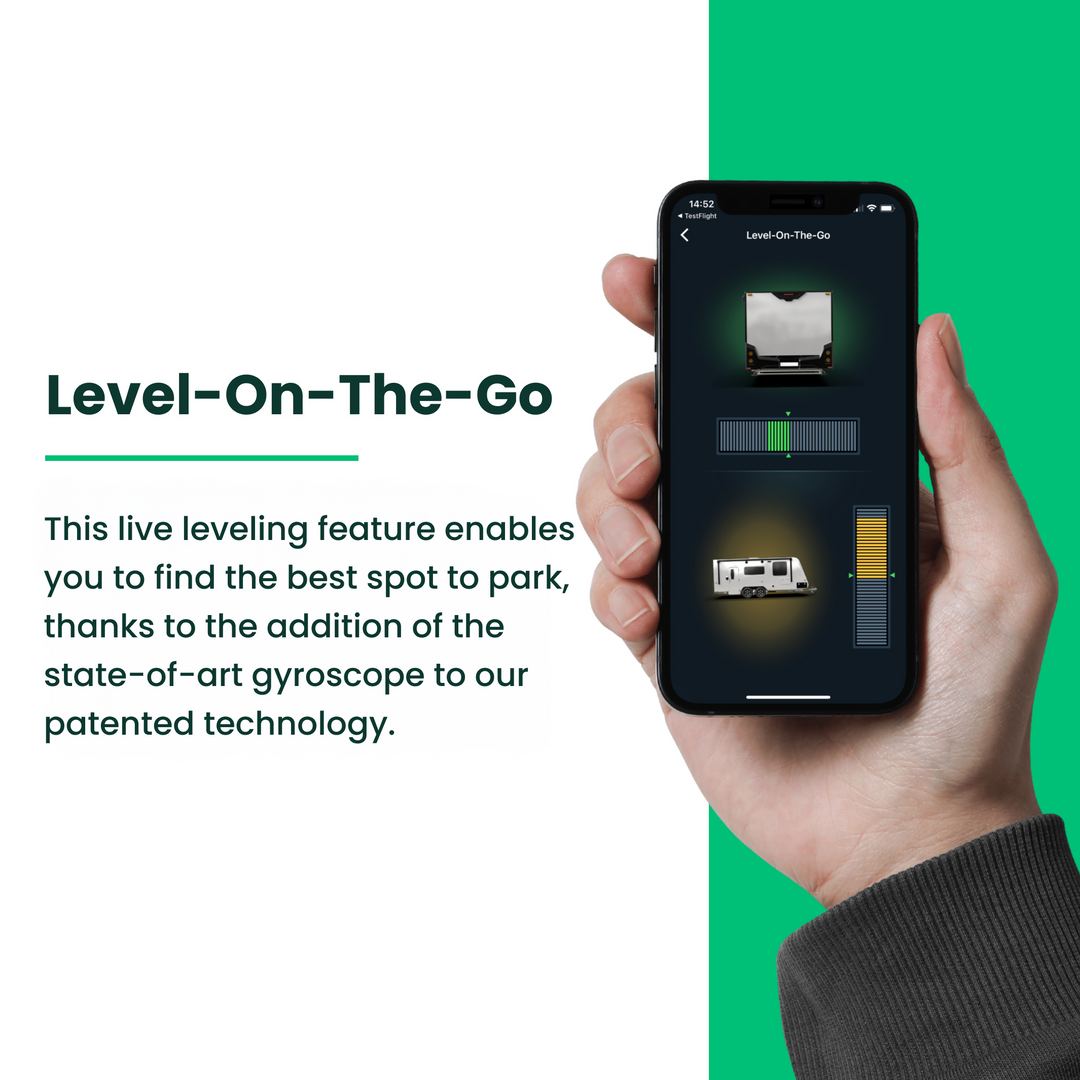
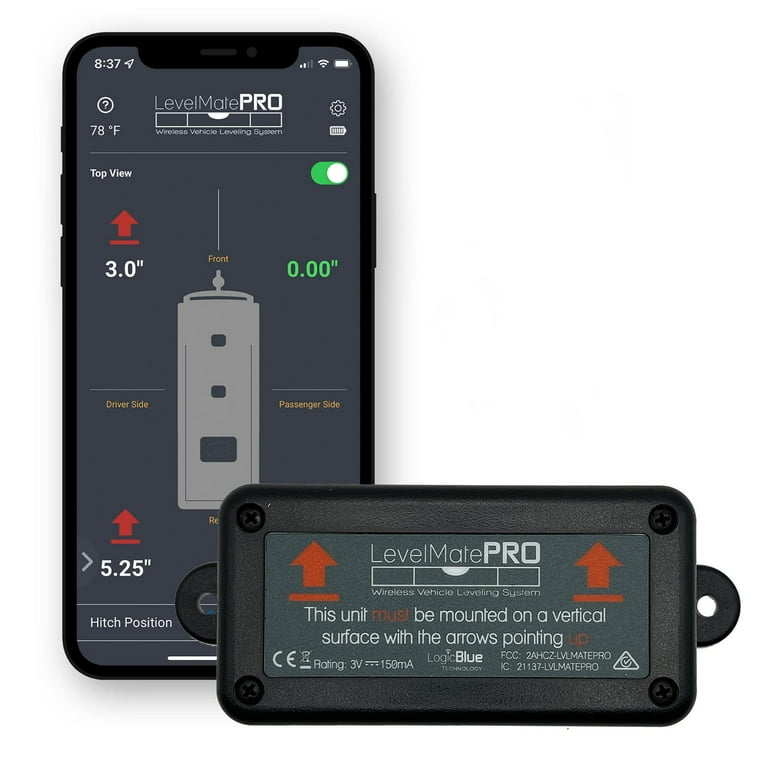
A phone-based system works in a different way. For example, LevelMatePRO measures the RV’s angle and tells you how much to raise each side. It does not usually move the jacks for you. Think of it as a digital level and setup coach, not a complete automatic leveling system.
When people ask which wireless RV leveling system is best, they often mix up wireless control with automatic leveling. Wireless control means you can operate the system without a wired handheld switch. Automatic leveling means sensors and software can make leveling decisions for you.

Best wireless RV leveling systems compared
Lippert Ground Control 3.0
The Ground Control 3.0 is a popular choice for compatible fifth wheels. It commonly uses four or six electric landing and stabilizer jacks, depending on the RV design.
Its main benefits include:
• Automatic front-to-back and side-to-side leveling
• Wireless remote operation
• Multiple jack control options
• A dedicated interior touchpad
• Memory and auto-level functions on supported installations
• No hydraulic fluid reservoir or hydraulic hoses
This system is a strong answer to which wireless RV leveling system is best for campers who want a mostly automatic setup. It works well for owners who move often and do not want to spend several minutes adjusting each jack.
The main drawback is motor speed. Electric jacks may move more slowly than hydraulic systems, especially under heavy loads or low battery voltage. The system also depends on correct installation and good ground connections.
Lippert Ground Control TT
The Ground Control TT is designed for many travel trailers. It can provide automatic leveling with powered stabilizers and front landing equipment when the trailer frame supports the installation.
This system may be the best wireless RV leveling system for a travel trailer owner who wants push-button setup. It can also reduce the need to kneel beside the trailer while operating the jacks.
Travel trailer owners should be careful, though. Stabilizer jacks are not always designed to lift the entire trailer. A technician must confirm that the system is installed at approved structural points and used within its rated capacity.
Lippert Level Up
The Level Up system is a hydraulic option commonly used on larger fifth wheels. Hydraulic jacks can provide strong lifting power and quick movement.
Advantages may include:
• High lifting capacity
• Fast operation
• Strong support for large fifth wheels
• Smooth automatic leveling on compatible units
• Good integration with factory-installed systems
The tradeoff is more complex service. Hydraulic systems have pumps, valves, hoses, seals, and fluid that may need inspection. A small leak can stop the system from working correctly.
For a large fifth wheel, Level Up may be the best wireless RV leveling system when lifting strength and speed matter more than simple maintenance.
LevelMatePRO
LevelMatePRO is one of the most useful wireless leveling tools for RV owners. It connects to a smartphone and measures the RV’s position. The app can tell you how much to raise or lower each side.
It works well with:
• Manual leveling blocks
• Andersen-style levelers
• Electric tongue jacks
• Existing automatic leveling systems
• Travel trailers and fifth wheels
LevelMatePRO is not a powered jack system by itself. It does not replace a complete leveling kit. Still, it may be the best wireless RV leveling system for someone who wants lower cost and better accuracy without replacing factory equipment.
Equalizer Systems
Equalizer Systems offers electric and hydraulic leveling products for different RV types. Some products include wireless operation, automatic functions, and control panels.
Its biggest strength is product range. Owners of motorhomes, fifth wheels, and specialty RVs may find a system that fits their design. Availability and exact features vary by model, so buyers should check the installation manual rather than relying only on a product name.
Equalizer Systems can be the best wireless RV leveling system when your RV manufacturer already supports that brand or when an authorized installer recommends it.

Electric versus hydraulic RV leveling systems
The choice between electric and hydraulic equipment is central to deciding which wireless RV leveling system is best.
Electric systems
Electric systems use motors and screw mechanisms. They are common on travel trailers and many fifth wheels.
Benefits include:
• Simple design
• No hydraulic fluid
• Fewer hoses and valves
• Easier visual inspection
• Good fit for many smaller and mid-size RVs
• Often lower installation complexity
Limitations include slower movement and greater sensitivity to low battery voltage. A weak battery can make the jacks seem faulty when the real problem is poor power.
Hydraulic systems
Hydraulic systems use a pump to move fluid through cylinders. They are common on large fifth wheels and motorhomes.
Benefits include:
• Strong lifting force
• Fast jack movement
• Good performance on heavy RVs
• Smooth operation when properly maintained
Limitations include:
• More parts to inspect
• Possible fluid leaks
• Higher repair costs
• More demanding installation
• Greater need for correct pressure and valve service
A simple way to remember the difference is this: electric systems are like power screwdrivers, while hydraulic systems are like shop lifts. Both can work well, but the larger machine needs stronger equipment.
Which system is safer?
A properly rated system installed at approved mounting points is safer than an oversized or poorly installed system. Never use leveling jacks to lift wheels off the ground unless the manufacturer specifically allows it.
Use wheel chocks before disconnecting a trailer. Keep people away from moving jacks. Follow the RV and leveling system manuals for load limits and emergency procedures.

How to choose the best wireless RV leveling system
Start with your RV type
The correct system for a fifth wheel may not fit a travel trailer. Motorhomes also use different layouts and weight ratings.
Check these details first:
• RV type
• Gross vehicle weight rating
• Pin or tongue weight
• Frame design
• Existing jack brand
• Number and location of jack points
• Battery voltage
• Available installation space
The best wireless RV leveling system must match the physical structure of your RV, not just its advertised weight.
Check the load rating
Every jack has a rated capacity. The combined capacity should provide a safe margin above the load that the jacks actually support.
Do not assume that four jacks share the RV’s full weight equally. Weight changes as tanks fill, slides extend, cargo moves, and people enter the RV. Ask an installer to confirm the real load at each mounting point.
Review wireless range
Wireless range can change with metal walls, other RVs, trees, and campground equipment. A remote that works across an open driveway may respond differently in a crowded campground.
Choose a system with a wired control panel as a backup. A wireless remote is convenient, but it should not be your only way to control the jacks.
Look for manual override features
A dead battery, failed remote, or damaged controller should not leave you helpless. Good systems often include manual override methods or service procedures.
Before buying, ask:
• Can the jacks be operated without the remote?
• Is there a manual crank or bypass?
• Can the controller be replaced separately?
• Are replacement motors available?
• Does the system show error codes?
Consider installation support
Installation quality affects performance more than many buyers expect. Bad grounds, loose battery connections, pinched wires, and incorrect sensor placement can cause false leveling results.
A strong dealer network is valuable. It may cost more at first, but access to parts and trained service can save time later.
Wireless RV leveling system features that matter most
When comparing which wireless RV leveling system is best, focus on useful features rather than flashy ones.
Automatic leveling
Automatic leveling uses sensors to find a level position. It can save time and make setup more consistent.
Still, automatic leveling does not remove the need for safe preparation. You must park on a suitable surface, set the parking brake, chock the wheels, and follow the correct disconnect sequence.
Wireless remote control
A remote lets you stand where you can see the jacks and the RV. This is safer than operating a hidden switch from inside the coach.
Keep the remote dry and replace its batteries before long trips. Store it in a known place so it does not get lost in a storage compartment.
App control
Phone apps can show system status and provide a familiar interface. However, apps depend on battery power, Bluetooth settings, software updates, and phone compatibility.
An app is a helpful extra. It should not be the only control method for a safety-related system.
Error alerts
Error messages can help identify low voltage, motor faults, sensor problems, or communication issues. Clear alerts are useful for both owners and technicians.
Take a photo of any error code before cycling the power. That small step can help a service center find the issue faster.
Memory and hitch height
Some systems can remember hitch height or preferred settings. This is useful for fifth-wheel owners who visit the same type of campsite often.
Memory features do not replace a final visual check. Ground conditions can change from one campsite to the next.

Common mistakes to avoid
Many leveling problems come from setup errors rather than poor equipment. These mistakes can damage jacks, bend brackets, or create an unstable coach.
Avoid these common errors:
• Failing to chock the wheels before disconnecting
• Using the jacks to correct a badly sloped campsite
• Extending slides before the RV is stable
• Ignoring low battery warnings
• Placing jacks on soft soil without pads
• Lifting wheels off the ground
• Operating jacks while people stand beneath the RV
• Skipping the manufacturer’s calibration process
• Assuming stabilizer jacks can lift the whole trailer
• Washing electrical parts with high-pressure water
One lesson that applies to nearly every setup is simple: leveling jacks are not a substitute for a solid campsite. If the ground slopes sharply, move the RV or use approved blocks under the wheels before using the powered system.
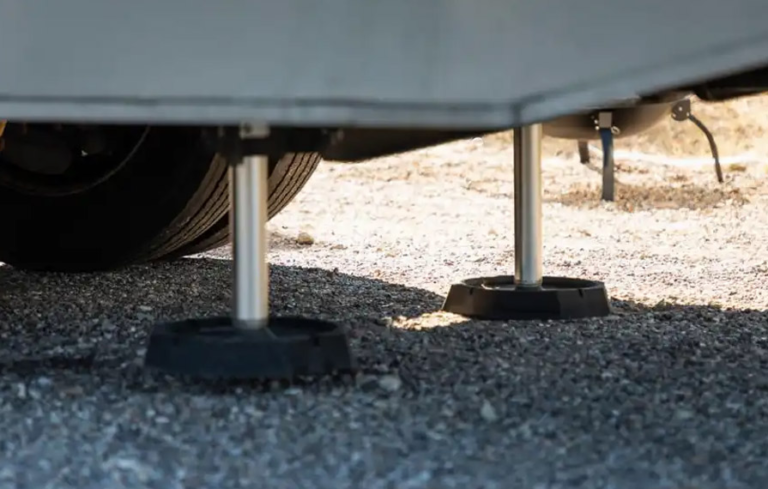
Use jack pads on gravel, dirt, or asphalt. Pads spread the load and reduce sinking. They also make it easier to find a stable contact point.

Installation, calibration, and maintenance tips
A professional installation is often worth the cost, especially for hydraulic systems or custom frames. The installer should inspect the frame, confirm jack placement, protect wiring, and test the system under realistic conditions.
After installation, calibrate the system on a truly level surface. A concrete pad or trusted shop floor is better than a random campsite. If the calibration point is wrong, the system may repeat the same error every time.
A basic maintenance plan includes:
• Check battery voltage before trips
• Inspect wires for rubbing or pinching
• Clean dirt from jack legs
• Look for hydraulic leaks
• Lubricate parts as directed by the manual
• Tighten loose grounds and terminals
• Check jack feet and pads
• Test the remote and backup controls
• Recalibrate after major repairs
Battery care deserves special attention. Many electric jack complaints begin with a weak battery or corroded terminal. A fully charged battery does not always prove that it is healthy under load, so have it tested if the jacks move slowly.
The best wireless RV leveling system will still need basic care. Think of it like a tire pressure monitoring system: it reduces work, but it does not remove responsibility.

Real-world buying advice
A useful field lesson is to test the complete setup before leaving the driveway. Run the jacks several times, try the remote from different locations, test the interior panel, and confirm that the system stops when you release the control.
Another practical lesson is to carry simple backup gear. Keep wheel chocks, leveling blocks, a small flashlight, spare remote batteries, and the system manual in an easy-to-reach compartment.
I also recommend taking a photo of the controller, wiring layout, and jack labels after installation. If a fault occurs on a rainy night at a campground, that photo can help you explain the issue to a technician.
For most buyers, the decision looks like this:
• Choose Ground Control 3.0 if you have a compatible fifth wheel and want electric automatic leveling.
• Choose Ground Control TT if you have a compatible travel trailer.
• Choose Level Up if you own a large RV and need strong hydraulic performance.
• Choose LevelMatePRO if you want accurate wireless guidance without replacing your jacks.
• Choose a system supported by your RV manufacturer if warranty coverage and service access are priorities.
The answer to which wireless RV leveling system is best should always include compatibility and service support. A slightly less advanced system that fits perfectly is better than a powerful system that requires unsafe modifications.
Frequently asked questions about which wireless RV leveling system is best
What is the best wireless RV leveling system for a fifth wheel?
Lippert Ground Control 3.0 is a strong choice for many compatible fifth wheels because it offers electric automatic leveling and wireless control. Large or heavy fifth wheels may benefit more from a hydraulic system such as Lippert Level Up.
What is the best wireless RV leveling system for a travel trailer?
Lippert Ground Control TT is designed for many travel trailers and can provide automatic electric leveling. Confirm frame compatibility, jack capacity, and approved mounting points before installation.
Is LevelMatePRO a complete wireless RV leveling system?
No. LevelMatePRO measures the RV’s position and tells you how much adjustment is needed, but it usually does not operate the jacks. It works as a wireless leveling guide and can complement manual or automatic equipment.
Are hydraulic RV leveling systems better than electric systems?
Hydraulic systems usually provide more lifting power and faster movement, while electric systems are often simpler to maintain. The better choice depends on RV size, weight, installation space, service access, and budget.
Can RV leveling jacks lift the wheels off the ground?
In most cases, no. Keep the tires on the ground unless the RV and leveling system manufacturer specifically approves another procedure, and use wheel chocks before operating the jacks.
Do wireless RV leveling systems work without cell service?
Many systems use radio signals or Bluetooth, so they do not need cellular service. Phone-based systems may still need Bluetooth, a charged phone, and the correct app settings.
How much does a wireless RV leveling system cost?
Costs vary widely based on the RV, jack type, automation, and installation labor. A sensor-based tool usually costs far less than a complete electric or hydraulic automatic leveling system.
Conclusion
The best wireless RV leveling system is the one that matches your RV’s frame, weight, jack layout, and travel style. For many fifth wheels, Lippert Ground Control 3.0 offers the best balance of automatic operation and wireless control. Travel trailer owners may prefer Ground Control TT, while large RV owners may need hydraulic power. LevelMatePRO remains an excellent lower-cost tool for accurate setup.
Before buying, verify capacity, installation points, backup controls, battery needs, and local service support. Take time to set up the system correctly, use solid pads and wheel chocks, and keep a manual backup plan. Compare compatible options for your RV, ask a qualified installer for an inspection, and share your leveling setup or questions in the comments.


One Comment