Rv Leveling Tires Off Ground: Safe Setup Tips
RV leveling with tires off the ground is usually unsafe unless your RV and leveling system allow it.
The question of rv leveling tires off ground causes confusion because some motorhomes use strong hydraulic jacks, while many travel trailers use stabilizers that are not made to lift the wheels. A level campsite should support the RV’s weight through the tires, suspension, and approved jack points. This guide explains when tires may leave the ground, why it can be risky, and how to level your RV with care.

What Does “RV Leveling Tires Off Ground” Mean?
RV leveling tires off ground means the leveling jacks lift one or more tires until they no longer touch the ground. This may happen when a campsite slopes sharply, when a driver adds too many leveling blocks, or when hydraulic jacks raise the RV too far.
The phrase can describe two different situations:
• A tire is slightly light or barely touching the ground.
• One or more tires are fully suspended above the ground.
These situations are not equal. A tire that is light but still touching the surface may not create the same concern as a wheel that hangs several inches in the air.
Most RVs are designed to rest on their tires. Leveling jacks help reduce movement and correct small height differences. They are not always designed to act as a complete replacement for the wheels and suspension.
That is why rv leveling tires off ground should never be treated as a normal goal. The owner’s manual and leveling system manual should always control the decision.
Should RV Tires Be Off the Ground When Leveling?
In most cases, no. The tires should remain firmly on the ground after leveling, especially on travel trailers, fifth wheels, and motorhomes that use stabilizing jacks.
The tires help support the RV’s weight. They also spread force across the axle, suspension, wheels, and frame. When the tires leave the ground, the jacks and frame may carry loads they were not designed to handle during ordinary setup.
Some motorhomes use a full hydraulic leveling system that may safely lift a wheel under certain conditions. However, this depends on the chassis, jack design, axle layout, and instructions from the manufacturer. A system that can raise a tire does not always mean it should do so during every campsite setup.
A useful rule is simple:
• Keep all tires on a stable surface when possible.
• Never lift a tire just to make the RV look perfectly level.
• Follow the exact jack instructions for your RV.
• Stop if the frame twists, the jack approaches its limit, or the RV feels unstable.
The goal is a safe, stable RV, not a perfect bubble reading at any cost.

Why RV Leveling Tires Off Ground Can Be Risky
Lifting tires changes how weight moves through the RV. It can place extra force on the frame, jacks, axles, suspension parts, and tires that remain on the ground.
Here are the main risks.
Reduced stability
Tires provide a wide and flexible base. Jacks have smaller contact points. If the tires leave the ground, the RV may become more sensitive to wind, movement, or an uneven surface.
A large motorhome can act like a tall box in strong wind. The higher it sits on jacks, the more it may sway.
Frame stress
An RV frame can flex, but it is not meant to twist without limits. Raising one side too high can place a diagonal load through the frame and body.
This may lead to:
• Doors that stick
• Cabinet gaps
• Cracked trim
• Windshield stress in some motorhomes
• Slide-out alignment problems
• Uneven floor movement
One of the most common lessons from rv leveling tires off ground is that a small setup error can become an expensive repair later.
Jack overload
Leveling jacks have weight limits. The limit may apply to one jack, one pair of jacks, or the complete system. A jack can also lose stability when it extends near its maximum length.
A jack that looks strong may still be working outside its safe range. Never use a leveling jack beyond the limits listed by the RV or jack maker.
Axle and suspension stress
When a tire hangs in the air, the axle and suspension may move into a position they rarely hold during travel. This can change the load on springs, equalizers, shackles, control arms, and brake lines.
On a trailer, the suspension may unload unevenly. On a motorhome, the wheel that remains on the ground may carry more weight than expected.
Wheel chock problems
Chocks only work well when the tires press against them. If a leveling process lifts the tires away from the chocks, the chocks may no longer stop movement.
This is especially dangerous on a slope. The RV can shift before the jacks fully support it.

Travel Trailers and Fifth Wheels: A Special Warning
Travel trailers and fifth wheels often have two different types of support:
• Leveling equipment, which may include landing gear or front jacks
• Stabilizing equipment, which supports the RV after the wheels are already level
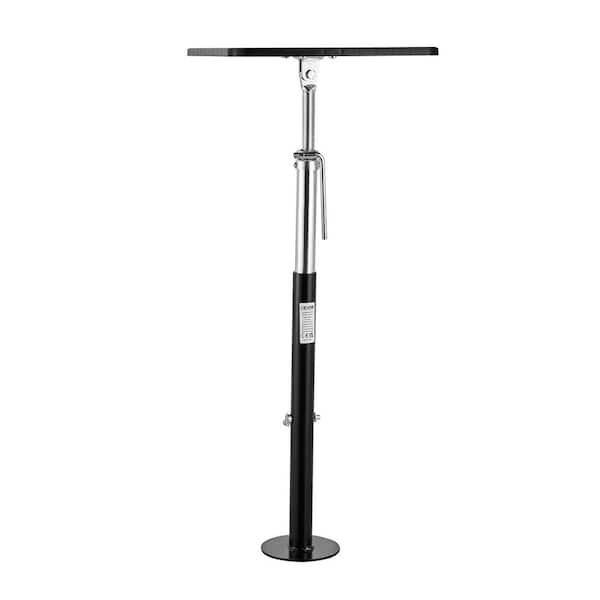
Many rear stabilizer jacks are not designed to lift the trailer. Their job is to reduce bounce, not to raise the axle or correct a major slope.
For a trailer, the usual order is:
-
Park on the site and keep the tow vehicle connected.
-
Place wheel chocks on both sides of the wheels.
-
Level from side to side with proper drive-on blocks or leveling blocks.
-
Disconnect the tow vehicle only after the wheels are secure.
-
Level from front to back with the tongue jack or fifth-wheel landing gear.
-
Lower the stabilizers until they make firm contact.
-
Avoid using stabilizers to lift the wheels.
If a trailer tire leaves the ground during this process, lower the trailer and correct the setup. Add more blocks under the low side, choose a better site, or reposition the RV.
For fifth wheels, the landing gear can support the front section during uncoupling. It should not be used carelessly to lift the wheels or create a steep angle between the truck and trailer.

Motorhomes and Hydraulic Leveling Systems
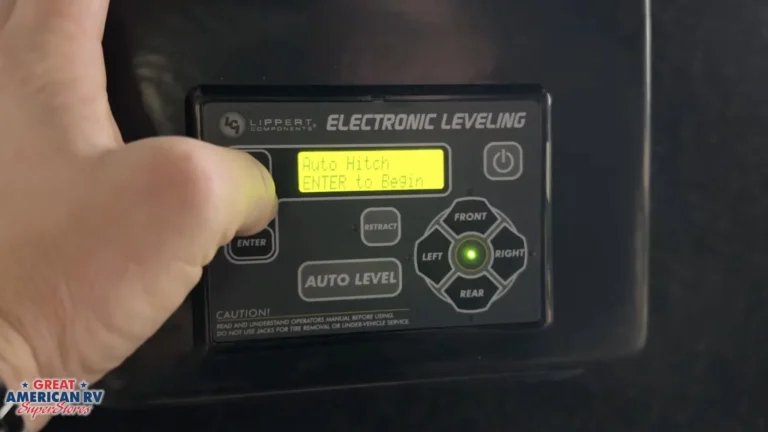
Motorhomes often use hydraulic or electric leveling systems. These systems can make setup quick, but automatic leveling does not remove the need for judgment.
Some systems may briefly lift a tire while finding a level position. Others may warn the driver or stop the process. Your system may also have a specific rule about whether tires can leave the ground.
Before using automatic leveling:
• Read the leveling system manual.
• Check the RV manufacturer’s instructions.
• Park with the front wheels as straight as practical.
• Keep the parking brake applied.
• Chock the wheels if the manual permits or requires it.
• Clear people and pets from the area around the jacks.
• Watch each jack while it extends.
If automatic leveling raises a tire, do not assume the system is wrong or safe. Stop and check the instructions. Some manufacturers allow limited tire lift. Others state that all tires must remain on the ground.
When rv leveling tires off ground happens on a motorhome, inspect the jack pads, frame, tires, and suspension before driving away. If the RV looks twisted or a slide-out operates poorly, retract the jacks and reset the coach.
How to Level an RV Without Lifting the Tires
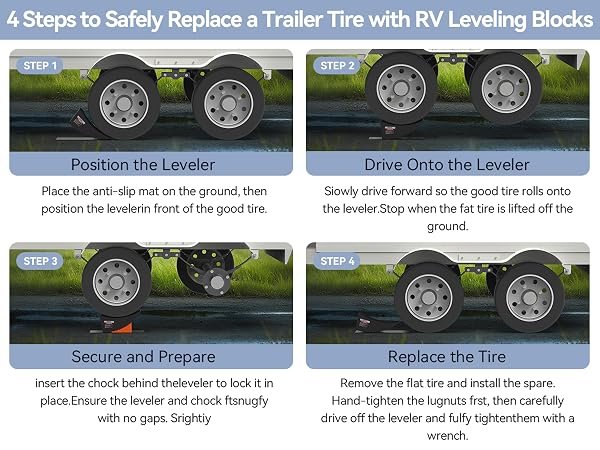
The safest method is to fix the slope before you rely on the jacks. Think of leveling blocks as a ramp that supports the tires, not as a way to build a tall tower.
Step 1: Pick the best parking position
Walk the site first. Look for soft soil, holes, deep ruts, tree roots, and sudden drop-offs. A site that looks level near the entrance may slope sharply at the rear.
If the site is too steep, ask for another space. No leveling trick can make every site safe.
Step 2: Find the low side
Use a small bubble level inside the RV or a dedicated RV level near the driver’s seat. Check side to side before disconnecting the tow vehicle.
Do not depend only on a refrigerator level. The refrigerator may be level while the floor or frame is not.
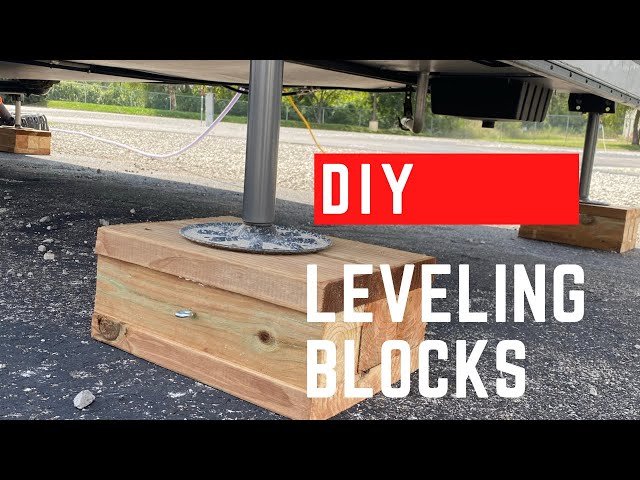
Step 3: Build a wide block ramp
Use blocks made for RV weight. Place them in a broad, even pattern. Avoid loose wood scraps, thin bricks, or small objects that can split or slide.
The blocks should:
• Match the tire width.
• Sit on firm ground.
• Create a gradual slope.
• Support the tires across the tread.
• Avoid sharp edges that can damage the tire.
Step 4: Drive onto the blocks
Move slowly. Have a spotter guide you when possible. Stop when the RV reaches the desired side-to-side level.
Apply the parking brake, place the transmission in park, and chock the wheels before uncoupling.
Step 5: Level front to back
Use the tongue jack, landing gear, or approved motorhome jacks. Make small adjustments. Large changes can lift a tire or twist the frame.
Step 6: Add stabilizer support
Lower stabilizers until they contact solid pads. They should reduce motion without lifting the RV.

What to Do If a Tire Is Already Off the Ground
Do not crawl under the RV or try to kick blocks into place while the jacks are loaded. A suspended RV can shift without warning.
Use this safer process:
-
Keep people away from the sides and underbody.
-
Stop the leveling system.
-
Check the manufacturer’s manual.
-
Retract the jacks slowly if the system allows it.
-
Reposition the RV or add proper blocks under the low-side tires.
-
Re-chock the wheels.
-
Level again with smaller adjustments.
If the jack will not retract, the RV leans badly, or the frame makes unusual sounds, call a qualified RV technician. Do not place any part of your body under an RV supported only by hydraulic or electric jacks.
A common mistake is adding more jack extension because the RV does not feel stable. That often makes the problem worse. A lower RV on wide blocks is usually safer than a tall RV balanced on extended jacks.
The Right Equipment for Safe RV Leveling
Good equipment makes rv leveling tires off ground less likely. It also reduces stress on the RV and makes setup easier.
Consider carrying:
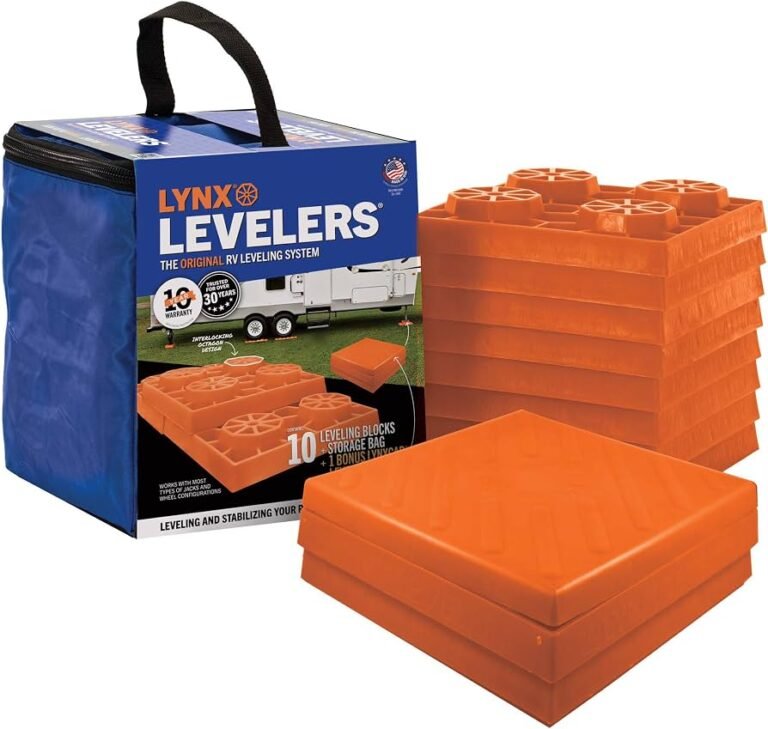
• Heavy-duty leveling blocks
• Wheel chocks rated for the RV’s weight
• Jack pads for firm ground
• A long bubble level or digital level
• A small shovel for clearing loose soil
• A flashlight or headlamp
• A tire pressure gauge
• A torque wrench for wheel checks
• A short board for soft ground, when approved by the jack maker
Do not place a jack on unstable material. Wet soil, sand, and hot asphalt can allow a jack pad to sink. A support pad should be large enough for the surface and approved for the weight.
Wood can work as a support material in some cases, but it must be sound, thick, and wide enough. Never use cracked boards or stacked pieces that can slide apart.
How Leveling Affects RV Appliances and Slides
Leveling is not only about comfort. Some RV systems work best when the coach is close to level.
Absorption refrigerators are a key example. Many RV manufacturers warn that these refrigerators should not operate for long periods when the RV is noticeably out of level. Excessive tilt can affect the cooling system and may cause damage over time.
Slides also need a stable base. If the RV frame twists, a slide may bind, scrape, or fail to seal. Before extending slides:
• Level the RV according to the manual.
• Set the parking brake.
• Use the required stabilizers.
• Check for trees, poles, and nearby vehicles.
• Confirm that the slide path is clear.
• Listen for unusual motor sounds.
Leveling does not need to be perfect to the nearest fraction of an inch. It needs to be within the limits set by the RV maker and stable enough for the systems inside.
Common RV Leveling Mistakes to Avoid
Even experienced campers can make setup mistakes after a long drive. Fatigue is a real safety issue, so use a repeatable routine.
Avoid these errors:
• Using stabilizer jacks to lift the tires
• Skipping wheel chocks
• Leveling before checking the ground
• Relying on a small indoor level alone
• Using stacked rocks or loose blocks
• Extending jacks to their maximum length
• Uncoupling before the trailer is secure
• Ignoring a tire that looks light or suspended
• Extending slide-outs before leveling
• Driving away with blocks or chocks still in place
I have seen the same pattern many times in campground setups: the owner tries to fix a steep site with jacks, then notices a door that will not close. The better fix is often simple—retract the jacks, reposition the RV, and use a wider base of blocks.
How to Tell If Your RV Is Too High on the Jacks
Watch for signs that the leveling system is carrying too much of the RV’s weight.
Warning signs include:
• One or more tires are clearly off the ground.
• The RV rocks when someone walks inside.
• The frame creaks or pops.
• A door will not close as it did before.
• Slide-outs move unevenly.
• A jack pad sinks or tilts.
• The RV leans after setup.
• The steering wheel or suspension looks unusual.
• The leveling system shows an error.
If you see these signs, stop and reset the RV. Do not try to solve a stability problem by extending another jack without checking the full setup.
The National Highway Traffic Safety Administration and RV manufacturers stress the importance of correct tire support, parking security, and safe load practices. For exact limits, the vehicle certification label, owner’s manual, and jack-system documentation are more reliable than general internet advice.
Safety Checklist for RV Leveling Tires Off Ground
Use this checklist before leaving the driver’s seat:
• Is the parking surface firm?
• Are all tires supported as the manufacturer requires?
• Are the wheel chocks tight against the tires?
• Are the jacks on stable pads?
• Are no jacks near their maximum extension?
• Is the RV within the leveling range in the manual?
• Are slides retracted during major leveling changes?
• Is the tow vehicle connected when the trailer requires it?
• Are people clear of the jacks and underbody?
• Does the RV remain steady when someone walks inside?
If the answer to any safety question is no, correct the setup before relaxing inside. A few extra minutes can prevent a damaged jack, bent frame, or dangerous roll.
Frequently Asked Questions About RV Leveling Tires Off Ground
Is it normal for RV tires to come off the ground while leveling?
It is not normal for most trailers and should not be the target of a normal setup. Some motorhome systems may allow limited tire lift, but you must follow the exact instructions for that RV and leveling system.
Can stabilizer jacks lift an RV tire?
Most trailer stabilizers are not designed to lift tires or support the full weight of the RV. Using them as lifting jacks can damage the stabilizer, frame, or mounting points.
Should I use leveling blocks under RV tires?
Yes, proper leveling blocks can support the tires and reduce the need for long jack extensions. Build a wide, stable ramp and use blocks rated for the RV’s weight.
Can I leave my RV with one tire slightly off the ground?
Do not leave it that way unless the RV manufacturer specifically permits it. A suspended tire can reduce stability and may place extra stress on the frame, axle, or jacks.
What should I do if automatic leveling lifts a tire?
Stop and check the leveling-system manual. If the system does not clearly allow tire lift, retract it carefully, reposition the RV, and use blocks to correct the slope.
Are hydraulic leveling jacks strong enough to hold an RV alone?
Strength is not the only issue. The frame, jack mounts, ground, axle, and wheel support must all be suitable, so never assume hydraulic jacks can replace the tires without manufacturer approval.
Can uneven RV leveling damage a refrigerator?
Yes, especially an absorption refrigerator operated while noticeably out of level for a long time. Keep the RV within the limits in the refrigerator and RV manuals.
Conclusion
RV leveling tires off ground is usually a sign that the setup needs attention, not a sign that the RV is perfectly level. Keep the tires supported when possible, use strong leveling blocks, chock every wheel, and treat stabilizers as support tools rather than lifting tools.
Motorhome owners should follow the hydraulic system manual, while trailer owners should be especially careful because many stabilizer jacks are not made to lift the wheels. When a campsite is too steep, the safest choice may be to reposition the RV or request another site.
Take a few minutes to inspect your setup before opening the slides or settling in. Your RV, your equipment, and everyone nearby will be safer for it.