
What Is The Best RV Leveling System: Easy Buying Guide
The best RV leveling system for most large motorhomes is an automatic hydraulic system with strong jacks and reliable one-touch controls.
Choosing the best RV leveling system depends on your RV’s weight, chassis, camping style, and budget. After comparing hydraulic, electric, manual, and air-based options, this guide explains what works best, what to avoid, and how to choose a system that keeps your RV safe, stable, and comfortable.
What Is an RV Leveling System?
An RV leveling system uses jacks, blocks, or air controls to make a recreational vehicle sit level on uneven ground. A level RV feels better inside, protects appliances, and reduces movement when people walk around.
Most RV leveling systems fall into four groups:
• Hydraulic leveling systems use fluid-powered jacks to lift and support the RV.
• Electric leveling systems use motor-driven jacks and are often found on smaller trailers and motorhomes.
• Manual leveling systems use hand-operated jacks, stabilizers, or leveling blocks.
• Air leveling systems adjust the RV’s air suspension to create a level ride.
The best RV leveling system does more than stop your RV from rocking. It must also support the vehicle without damaging the frame, tires, suspension, or slide-out structure.

The Best RV Leveling System by RV Type
There is no single system that suits every RV. A compact travel trailer needs less lifting power than a 40-foot diesel pusher. Matching the system to the RV is the first step toward a safe purchase.
Best system for a large motorhome
For a Class A motorhome, an automatic hydraulic system is usually the best RV leveling system. Hydraulic jacks can handle heavy loads and lift the coach with little effort.
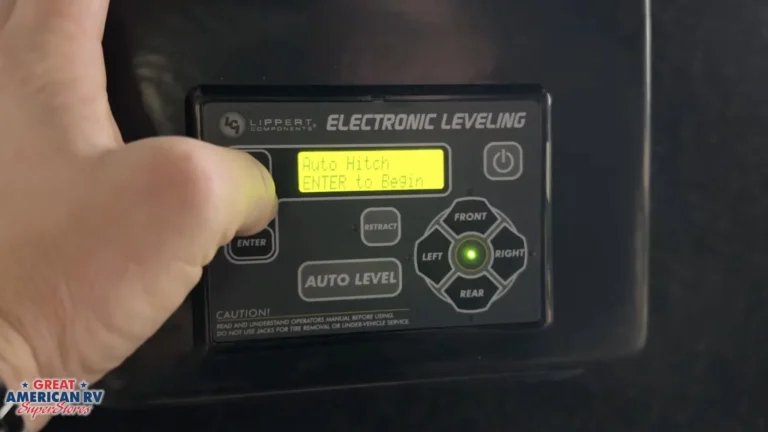
A one-touch control panel can extend the jacks and adjust the coach in minutes. Some systems also include automatic calibration, low-voltage protection, and warning alarms.
Hydraulic systems are especially useful for:
• Large Class A motorhomes
• Diesel pushers
• Coaches with several slide-outs
• Full-time RVs
• Campers that often stay in one location for several days
Best system for a travel trailer
A travel trailer often needs a combination of tongue jacks, stabilizer jacks, and leveling blocks. An electric tongue jack makes hitching easier, while sturdy stabilizers reduce movement after the trailer is parked.
For many travel trailers, the best RV leveling system is a reliable electric setup with strong wheel chocks and properly rated leveling blocks. Full hydraulic systems can work well, but they may cost more than needed.
Best system for a fifth wheel
Fifth wheels benefit from an electric or hydraulic landing gear system. Many modern fifth wheels use six-point leveling, which spreads the load across the frame.
Hydraulic systems are often the best RV leveling system for large fifth wheels because they offer strong lifting force and fast setup. Electric systems may be a better value for lighter fifth wheels or occasional campers.
Best system for a small camper
Small travel trailers, pop-up campers, and lightweight campers usually do not need a complex automatic system. Leveling blocks, a tongue jack, and manual stabilizers may provide enough support.
In this case, the best RV leveling system is often the simplest one that safely handles the trailer’s gross vehicle weight rating.

Hydraulic vs. Electric RV Leveling Systems
The main choice for many RV owners is between hydraulic and electric jacks. Both can work well, but they have different strengths.
Hydraulic leveling systems
Hydraulic systems use a pump, fluid reservoir, valves, hoses, and hydraulic cylinders. The pump pushes fluid into the cylinders, which extend the jacks.
Advantages include:
• High lifting power
• Fast operation
• Strong support for heavy RVs
• Smooth automatic leveling
• Good performance on larger coaches
The main drawbacks are higher cost, more complex repairs, and the chance of fluid leaks. A damaged hose or weak pump can stop the system from working until it is repaired.
Electric leveling systems
Electric systems use motors and screw mechanisms to move the jacks. They are common on travel trailers, fifth wheels, and smaller motorhomes.
Advantages include:
• Lower purchase cost
• Simple installation
• No hydraulic fluid
• Easier part replacement in many cases
• Good performance for lighter RVs
Their limits include lower lifting power, slower movement, and greater sensitivity to a weak battery. An electric motor can also struggle if a jack is overloaded or used on a poor surface.
Which one should you choose?
The best RV leveling system for a heavy motorhome is usually hydraulic. The best RV leveling system for a light or mid-size trailer may be electric.
Do not choose based only on price. Check the combined lifting capacity, frame design, installation instructions, warranty, and availability of replacement parts.

Automatic Leveling vs. Manual Leveling
Automatic leveling saves time, but manual leveling can be dependable and affordable. The right choice depends on how often you camp and how much effort you want to spend at each site.
Benefits of automatic leveling
An automatic system uses sensors to detect the RV’s position. With a control panel or smartphone app, it can extend the jacks and make small corrections.
Benefits include:
• Faster campsite setup
• Less crawling under the RV
• More consistent results
• Easier leveling for people with limited mobility
• Better control when parking on uneven ground
An automatic system is useful when you move often. It can turn a tiring setup into a short routine.
Benefits of manual leveling
Manual leveling systems cost less and have fewer electronic parts. They can also be easier to troubleshoot when camping far from a repair shop.
Manual leveling works well when:
• You camp only a few times each year
• Your RV is small
• You already own sturdy blocks and jacks
• You want fewer electronic components
• You prefer to make every adjustment yourself
Manual systems take more time. They also require good judgment because the RV must be supported at the correct points.
A key safety point
Leveling jacks are not always designed to hold the full RV for extended periods without help. Use the jacks according to the manufacturer’s instructions, and never place them on soft soil without a wide, stable base.

Features to Look for in the Best RV Leveling System
A good leveling system should be strong, stable, simple to use, and supported by a dependable manufacturer. These features can make a major difference during real camping trips.
Correct weight capacity
Check the RV’s gross vehicle weight rating and axle ratings. The leveling system must have enough capacity for the actual vehicle, not just its empty weight.
Leave a safety margin. A system operating near its maximum rating may work harder and wear faster.
Automatic leveling sensors
Automatic sensors should be easy to calibrate. A poorly calibrated system can make the RV appear level while the floor, refrigerator, or slide-out is still out of position.
Some systems use a digital control panel. Others use an app. Both can work well, but physical controls are useful if your phone battery is low or the wireless connection fails.
Strong jack feet
Wide footpads spread pressure over a larger area. They are less likely to sink into sand, mud, or wet grass.
For soft campsites, carry large jack pads even if your system includes standard feet. A jack pad is not a luxury; it is basic ground support.
Manual override
A manual override can help you retract or extend the jacks if the motor, control panel, or battery fails. This feature may save a trip when you are far from a service center.
Low-voltage protection
Many leveling problems begin with a weak battery. Low-voltage protection can help prevent damage to motors and control electronics.
Still, check the battery before using the system. A leveling system should not replace proper battery care.
Weather-resistant parts
The jacks and control components face road spray, dust, salt, and rain. Look for sealed connectors, protected wiring, and corrosion-resistant materials.
Service and parts support
A lower-priced system is not a good deal if parts are hard to find. Before buying, check whether local RV shops can service it and whether replacement motors, pumps, seals, and control boards are available.

How Much Does an RV Leveling System Cost?
The cost of the best RV leveling system varies by design, capacity, and installation needs.
Typical price ranges may look like this:
• Leveling blocks and manual tools: about $50 to $300
• Electric jack systems: about $500 to $2,000
• Automatic electric systems: about $1,500 to $4,000
• Hydraulic systems: about $3,000 to $8,000 or more
• Professional installation: often several hundred to more than $2,000
These figures are general estimates. Prices change with the RV model, system capacity, labor rates, and included parts.
A cheap system can become expensive if the installation requires frame changes, new wiring, or extra brackets. Ask for a complete quote that includes parts, labor, calibration, and warranty coverage.
For many owners, the best RV leveling system is not the most expensive model. It is the system that fits the RV without unnecessary features.

How to Install an RV Leveling System
Installation can range from simple to highly technical. A basic electric jack may suit a skilled DIY owner, while a hydraulic system often deserves professional installation.
A typical installation involves:
-
Confirming the correct mounting points.
-
Supporting the RV with approved equipment.
-
Removing or repositioning existing jacks.
-
Installing brackets and leveling cylinders or motors.
-
Routing wiring or hydraulic hoses safely.
-
Connecting the control panel and battery.
-
Checking fluid levels or electrical connections.
-
Calibrating the level sensors.
-
Testing the system on a firm, level surface.
-
Inspecting every jack before road use.
Never work beneath an RV supported only by leveling jacks. Use rated jack stands and follow safe lifting practices. An RV can weigh many tons, and a small mistake can cause severe injury.
One lesson I have learned from working through RV setup problems is that installation quality matters as much as the brand. A well-installed mid-range system can outperform a premium system with loose wiring, poor calibration, or weak mounting points.

How to Use an RV Leveling System Safely
Even the best RV leveling system can cause damage when used incorrectly. Follow a consistent setup routine at every campsite.
-
Park on the firmest area available.
-
Keep the RV aligned as straight as possible.
-
Set the parking brake and place the transmission in park.
-
Place wheel chocks before disconnecting a trailer.
-
Check for rocks, holes, tree roots, and soft soil.
-
Extend the jacks only at approved frame points.
-
Use wide pads under the jack feet.
-
Level from side to side before adjusting front to back, unless the manufacturer gives different instructions.
-
Watch the tires, frame, slide-outs, and doors during adjustment.
-
Confirm that the jacks are fully retracted before driving.
Do not use leveling jacks to lift one wheel far off the ground unless the manufacturer specifically allows it. The system is made to level and stabilize the RV, not to replace a service lift.

Common RV Leveling Problems and Fixes
A leveling system can show warning signs before it fails. Learning these signs helps prevent expensive repairs.
The jacks will not move
Check the battery voltage, main fuse, emergency brake switch, ground connection, and control panel. A low battery is one of the most common causes of electric jack problems.
For hydraulic systems, inspect the pump power connection and fluid level. Do not touch a leaking hydraulic line while the system is pressurized.
The RV is still rocking
Leveling jacks do not remove every movement. Soft ground, loose tires, worn bushings, and an uneven load can still cause rocking.
Use stable jack pads, keep the RV tires firmly supported, and avoid placing excessive weight in one area. Heavy slide-outs can also change how the coach settles.
One jack extends more slowly
A slow electric jack may have a worn motor, poor ground, damaged wiring, or excess load. A hydraulic jack may have a dirty valve, low fluid, or a restriction in the line.
Stop using the system if the jack bends, leaks, makes grinding sounds, or moves unevenly.
The automatic system gives a false level
The sensor may need calibration. Park on a known level surface and follow the calibration process in the owner’s manual.
Also check whether the RV floor is actually level. A countertop or refrigerator may give a different reading than the floor.
The jacks sink into the ground
Use larger pads and move to firmer ground when possible. Plastic pads work well for many sites, while thick wood blocks can provide extra support when approved for your system.
Never place unstable objects such as loose rocks, thin boards, or stacked scraps beneath a jack.

RV Leveling System Maintenance
Routine maintenance helps the best RV leveling system last longer. It also gives you a chance to find small problems before they become campsite emergencies.
For electric systems:
• Keep motors and jack legs clean.
• Inspect wiring for cuts and loose connections.
• Check battery voltage before travel.
• Look for bent jack tubes or damaged mounts.
• Lubricate moving parts only as directed by the manufacturer.
For hydraulic systems:
• Check the reservoir fluid level.
• Inspect hoses and fittings for leaks.
• Look for cracked seals or wet areas near cylinders.
• Keep the pump and valves clean.
• Use only the specified hydraulic fluid.
Do not mix fluids unless the manufacturer clearly allows it. The wrong fluid can damage seals and affect system performance.
At least once each season, inspect the system with the jacks fully retracted and extended. Listen for changes in sound and watch for uneven movement.
Mistakes to Avoid When Choosing a Leveling System
Many RV owners focus on the purchase price and overlook the total ownership cost. These mistakes can lead to poor performance or early failure.
Avoid these errors:
• Choosing a system without checking the RV frame.
• Using the dry weight instead of the loaded weight.
• Buying a system with barely enough capacity.
• Ignoring installation labor.
• Skipping manual override features.
• Assuming automatic leveling means fully automatic camping setup.
• Using the jacks without wheel chocks.
• Forgetting to check ground conditions.
• Buying a system with poor parts support.
• Failing to read the warranty terms.
A system may be powerful but still unsuitable if the mounting brackets do not fit your chassis. Always confirm compatibility by RV make, model, year, chassis, and floor plan.
Is an RV Leveling System Worth It?
An RV leveling system is often worth the money if you camp often, own a large RV, or want a faster setup. It can improve comfort and reduce the frustration of adjusting blocks by hand.
Leveling also helps some RV appliances operate as intended. Absorption refrigerators, for example, should be kept reasonably level during operation. Always follow the refrigerator manufacturer’s guidance because exact limits vary.
The value is lower for someone who owns a small camper and camps only a few weekends each year. In that case, quality blocks and a good tongue jack may be enough.
The best RV leveling system should solve a real problem. Do not buy extra features simply because they look impressive in a product advertisement.
Frequently Asked Questions About the Best RV Leveling System
What is the best RV leveling system for a Class A motorhome?
An automatic hydraulic system is usually the best RV leveling system for a large Class A motorhome. It provides strong lifting power, quick setup, and stable support for a heavy coach.
Are hydraulic RV leveling systems better than electric systems?
Hydraulic systems are usually stronger and faster, while electric systems are often less expensive and simpler to maintain. The better option depends on the RV’s weight, frame, budget, and how often you camp.
Can RV leveling jacks lift the entire RV?
Some systems are designed to lift part of the RV, but leveling jacks should not automatically be treated as lifting equipment. Follow the manufacturer’s limits and never work beneath an RV supported only by leveling jacks.
Do I need leveling blocks with automatic jacks?
Yes, leveling blocks can still be useful. They spread the load on soft ground, reduce jack extension, and help protect the campsite surface.
How level should an RV be?
An RV should be level enough for comfortable movement and proper operation of onboard equipment. Use the limits in your appliance and leveling-system manuals rather than relying only on a bubble level.
How long do RV leveling jacks last?
Service life depends on use, weather, maintenance, load, and installation quality. Clean parts, protected wiring, correct lubrication, and early repair can help electric or hydraulic jacks last for many years.
Conclusion
The best RV leveling system for most large motorhomes is an automatic hydraulic setup because it offers strong support, fast operation, and easy control. For smaller trailers and campers, an electric or manual system may deliver better value with less cost and maintenance.
Start by checking your RV’s loaded weight, frame design, jack capacity, ground conditions, and service options. Choose a properly rated system, install it safely, and carry reliable jack pads and wheel chocks. With the right setup, leveling your RV becomes a simple step toward safer, calmer, and more comfortable camping.


28 Comments